
Table of Contents
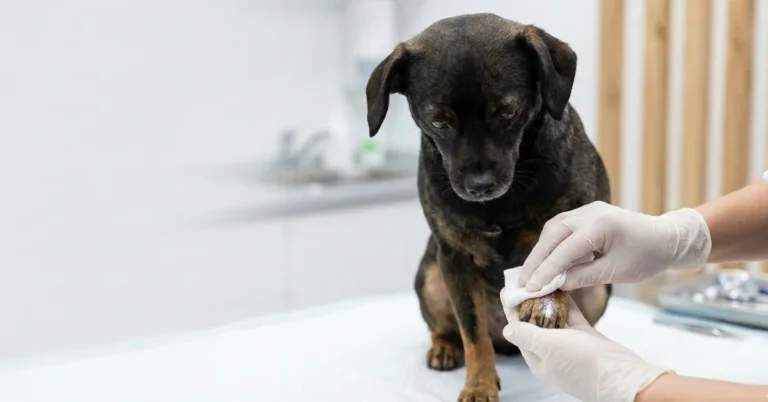
If you are reading this right now, chances are your adrenaline is spiking. You might be looking at a trail of blood on your kitchen floor, or watching your dog hold their paw up, refusing to put weight on it.
First, take a deep breath.
In my ten-plus years of veterinary practice, nail injuries are easily one of the most common trauma cases I treat. I have seen everything from Great Danes who snagged a nail on a chain-link fence to tiny Chihuahuas who took a bad jump off the sofa.
The scene often looks terrifying. Because the nail bed is rich in blood vessels, these injuries tend to bleed profusely—far more than the severity of the wound usually warrants. It looks like a crime scene, but in the vast majority of cases, it is not life-threatening.
While nail injuries are painful and messy, they are highly treatable. The key is understanding exactly what has happened to the anatomy of the paw so you can make the right decision about your next steps. In this guide, we are going to strip away the panic and look at the facts.
What Is a Dog Nail Injury?
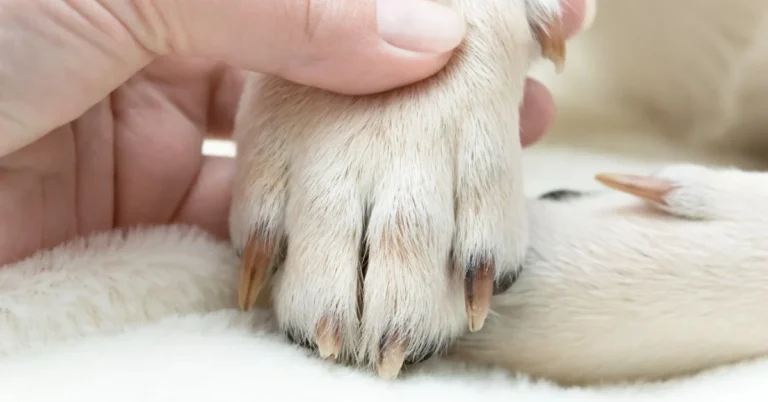
To understand why your dog is in pain, we need to quickly look at how a dog’s toenail is built. Unlike human fingernails, which are flat plates growing over a nail bed, a dog’s nail is more like a cone.
The hard outer shell is made of keratin—this is the non-living part you trim during a pedicure. Inside that hard shell is the “quick.” The quick is living tissue. It contains a central blood vessel and a nerve.
A dog nail injury occurs when that hard outer shell is compromised, exposing, crushing, or severing the sensitive quick inside.
Think of it like ripping your own fingernail back to the nail bed. It is an intense, sharp pain. Because the quick is attached to the bone (the distal phalanx), any pressure on a damaged nail sends pain signals directly up the leg.
The Spectrum of Severity
Not all nail injuries are created equal. In the clinic, I generally categorize them into two buckets:
- Minor Trauma: This might be a chipped tip where the quick is not exposed, or a very superficial crack. The dog might lick it for a few minutes and then go back to playing. These are often manageable at home with watchful waiting.
- Significant Trauma: This is what usually brings owners to my exam table. This involves the quick being exposed, the nail being torn away from the skin, or the nail hanging loosely. These are intensely painful and require intervention to stop the pain and allow healing to begin.
Common Causes of Dog Nail Injuries
You might be wondering, “How did this happen?” Owners often feel guilty, thinking they missed something. But the truth is, dogs are active animals that interact with the world through their paws. Nail injuries are often just bad luck.
Here are the most frequent culprits I see in my practice.
Accidental trauma and impact
This is the “freak accident” category. Dogs use their nails for traction. When a dog is running at full speed and makes a sharp turn, the nails dig into the earth. If one nail hits a root, a rock, or a gap in the patio pavers while the rest of the body keeps moving, the torque can snap the nail instantly.
I also see this frequently with dogs jumping in and out of cars. A nail gets caught on the metal latch of the trunk or the edge of a crate, and as the dog jumps down, the nail stays behind.
Overgrown nails catching or tearing
This is a preventative factor we can control, but it is also a very common cause of injury. When a dog’s nails are too long, they touch the ground even when the dog is standing still.
Mechanically, a long nail acts like a lever. If a long nail gets snagged on a carpet loop, a deck slat, or even a heating vent, the length of the nail provides enough leverage to rip it right out of the nail bed with very little force. I often tell my clients: the shorter the nail, the safer the paw.
Rough surfaces and outdoor activity
Active dogs—hikers, runners, and field dogs—are at higher risk simply because of exposure. Running on concrete or asphalt acts like sandpaper. While this usually files nails down, sudden stops on rough surfaces can shear the nail off horizontally.
Hiking on rocky terrain or shale is another common scenario. A dog’s foot can slip between two rocks, trapping a nail. When they pull their paw back, the nail breaks.
Improper nail trimming
I want to address this with zero judgment: accidental injury during trimming happens. It happens to owners, it happens to groomers, and yes, it has even happened to me.
If a dog jerks their paw at the exact moment the trimmers close, you can accidentally cut into the quick. While this is technically an injury, it is usually a clean cut that heals faster than the ragged tears caused by trauma. However, it still causes bleeding and pain that needs to be managed immediately.
Signs and Symptoms of a Dog Nail Injury
Sometimes the signs are obvious (blood everywhere), but other times, the injury is more subtle. Dogs are stoic creatures; they often try to hide pain until it becomes unbearable.
Here is what you need to look for.
Bleeding
This is the hallmark sign. The blood vessels in the quick are under decent pressure. When the quick is severed, it can pulse or drip blood steadily. Because paws are at the extremities and hit the floor with every step, the natural clotting process is constantly disrupted. You might find bloody paw prints throughout the house before you even realize the dog is hurt.
Limping
If your dog suddenly pulls up lame during a game of fetch, or refuses to put weight on a specific paw after coming inside from the backyard, check the nails first. They may walk on three legs, or they may “feather” the foot—touching it lightly to the ground but not bearing full weight.
Pain reactions
Watch for behavioral changes.
- Licking: Localized, obsessive licking of one toe is a major red flag. Saliva contains bacteria, so while this is a sign of pain, we want to discourage it immediately.
- Vocalization: A yelp when the injury happens, or a low growl if you try to touch the paw.
- Guarding: Your dog may pull their paw away or tuck it under their body to protect it from being touched.
Broken, cracked, or torn nails
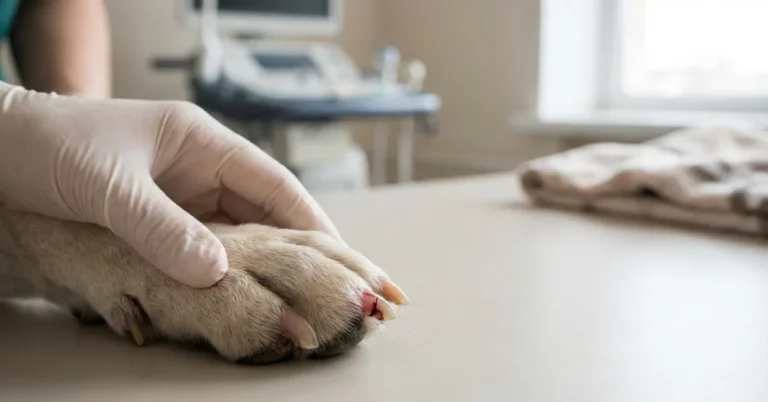
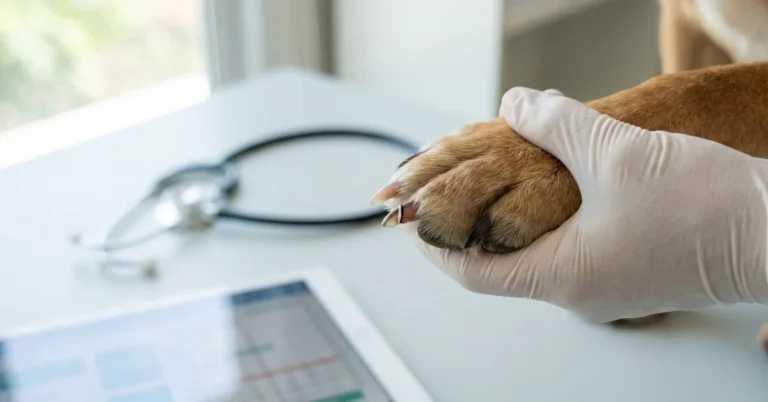
Visual inspection confirms the diagnosis. You might see the nail bent at an unnatural 90-degree angle (sideways or upwards). You might see the pink, fleshy quick sticking out without its protective shell. Or, you might see a vertical crack running from the tip of the nail all the way up into the fur line.
Types of Dog Nail Injuries
Not all breaks are the same, and the type of break dictates how much pain the dog is in.
Broken dog toenail
This is a general term, but usually refers to a clean break of the keratin shell. If the break is at the very tip (distal), it might not bleed or hurt much. If the break is higher up, exposing the quick, it becomes an open wound.
While some broken nails are minor and heal with simple care, others can split deeper into the quick, cause persistent bleeding, or become infected if not managed properly. The severity often depends on where the nail fractured and whether the nail bed itself was damaged. Because treatment varies significantly between a small tip break and a more serious partial tear, it’s important to understand exactly what type of injury you’re dealing with before taking action.
Nail torn halfway
In the veterinary world, we often call this a “hanging nail.” This is arguably the most painful type of injury. The nail is broken but still attached by a strip of tissue or keratin.
Every time the dog takes a step, the loose part of the nail wiggles and rubs against the exposed, raw nerve of the quick. You might hear a “clicking” sound when the dog walks. Dogs with this injury are often the most distressed because the source of pain is constant and moving.
Nail ripped off
This is called an avulsion. The entire keratin shell has been pulled off, leaving just the quick (which looks like a raw, red, fleshy stump) exposed. While it looks gruesome—like a raw nerve ending—it is sometimes less painful than a hanging nail because there is no loose shell rubbing against the nerve. However, the exposed quick is incredibly sensitive to air, temperature, and touch.
Cracked or split nail
These are frustrating injuries. A vertical split travels up the length of the nail toward the paw. These can be deceptive; they might not bleed much, but the split can pinch the sensitive tissue inside every time the dog puts pressure on the nail. These often require careful trimming to stop the split from traveling further up into the nail bed.
So, you have identified the injury. You know what it is, and you know why your dog is hurting. Now comes the critical part: What do you do right now to stop the bleeding and help your dog?
In Part 2, we will move away from the “what” and into the “how.” I will walk you through the exact first-aid steps I recommend to my clients, including how to safely stop that scary bleeding, how to bandage the paw if necessary, and exactly when you need to make that drive to the vet clinic.
In Part 1, we identified the injury. Now, we are in the “active response” phase.
If your dog is leaving bloody footprints on your carpet or holding a paw in the air, your priority is simple: stop the bleeding and manage the pain.
As a veterinarian, I cannot stress this enough: stay calm. Your dog feeds off your energy. If you are panicking, your dog’s blood pressure rises, which only makes the bleeding worse. Take a breath. You can handle this.
Dog Nail Injury First Aid
The moments immediately following a nail injury can be chaotic. Here is your step-by-step game plan.
1. Safety First (Restraint)
Before you touch that paw, remember this rule: Pain can make even the sweetest dog bite.
I have treated therapy dogs who snapped when I touched an exposed quick. It is a reflex, not aggression. If your dog is growling, lip-curling, or showing whale eye (whites of the eyes showing), do not put your face near them.
- Have a second person hold the dog if possible.
- If you are alone and the dog is reactive, you may need to apply a makeshift muzzle (using a leash or gauze) just for the few minutes you are treating the wound.
- Move the dog to a non-slip surface with good lighting (like a bathroom or kitchen).
2. Assess the Damage
Lift the paw gently. You are looking for two things:
- Is the nail still attached? Is it dangling loosely, or is it firmly attached but split?
- Where is the blood coming from? Is it the tip or the base?
Some links in this guide may be affiliate links. This does not affect our content or recommendations
If the nail is dangling by a tiny thread of skin, it is often less painful to quickly snip that thread with clippers than to let it drag. However, if the nail is still firmly attached to the quick, DO NOT pull it. Pulling a firmly attached nail is excruciating and requires sedation in a veterinary clinic.
How to Stop a Dog Nail from Bleeding
The vascular supply to the nail bed is robust. When the quick is cut or torn, it bleeds freely because the rigid shell of the nail prevents the blood vessel from collapsing and sealing itself off easily like a skin wound would.
Here are the most effective ways to stop the flow.
The Styptic Powder Method (Gold Standard)
Every dog owner should have a jar of styptic powder (commonly known by brands like Kwik Stop) in their first aid kit. This yellow powder contains silver nitrate or ferric subsulfate, which cauterizes the blood vessel on contact.
- Pour a small amount of powder into the lid of the container.
- Dip the bleeding nail directly into the powder, or press a pinch of it onto the bleeding tip with your finger.
- Apply pressure. It might sting for a second, so be prepared for your dog to jerk their paw back.
- Hold it there for 15–30 seconds.
The “Kitchen Cabinet” Method
If you don’t have styptic powder, don’t panic. You can use cornstarch, flour, or baking soda.
- Make a thick paste by mixing the flour/cornstarch with a tiny drop of water, or just pack the dry powder directly onto the nail tip.
- It doesn’t work as fast as chemical cautery, so you will need to hold pressure longer—usually 2 to 3 minutes.
The Pressure Method
If you have no supplies, simple mechanical pressure works.
- Use a clean gauze pad, tissue, or paper towel.
- Squeeze the toe firmly (not the leg, just the toe).
- The 5-Minute Rule: Hold pressure for 5 continuous minutes without peeking. Every time you lift the gauze to “check if it stopped,” you rip away the forming clot and start the clock over.
What if it won’t stop? If you have applied styptic powder and pressure for over 10–15 minutes and the blood is still actively dripping or spurting, this constitutes a veterinary visit. There may be a deeper vessel involved or a clotting issue.
Dog Nail Injury Home Treatment
Once the bleeding has stopped, the adrenaline wears off and your dog will likely want to lick the paw. We need to protect the area to allow the quick to dry out and callous over.
Cleaning the Area
If the injury happened outside in the mud, you need to clean it.
- Use lukewarm water or a sterile saline solution.
- Gently flush the paw. Do not scrub the exposed quick; it is raw nerve ending. Just rinse away debris.
- Pat dry gently around the nail.
Bandaging Basics
Does a torn nail need a bandage? Not always. In fact, air exposure helps the quick dry out and harden faster. However, if the dog is licking it or you need to go outside for a potty break, a light bandage is helpful.
The Sock Trick: For indoor protection, an old, clean tube sock is often better than medical tape.
- Put the sock on the paw.
- Use medical tape (not duct tape!) to secure the top of the sock loosely around the leg (above the ankle/hock).
- The Two-Finger Rule: You must be able to fit two fingers comfortably between the tape and your dog’s leg. If it’s too tight, you risk cutting off circulation, which causes swelling and serious tissue damage.
If you must use a bandage wrap (like VetWrap or Coban):
- Apply it loosely. These materials tighten after they are applied.
- Never leave a bandage on for more than 24 hours without changing it.
- Check the toes frequently. If they feel cold or look swollen (spreading apart), the bandage is too tight. Take it off immediately.
Preventing Licking and Chewing
This is the most annoying part for owners, but the most critical for healing. You must stop the dog from licking. A dog’s mouth is full of bacteria. Licking turns a clean, healing trauma into a moist, inflamed mess.
- The E-Collar (Cone of Shame): I know, nobody likes them. But wearing a cone for 3–5 days is better than weeks of complications.
- Bitter Sprays: You can try spraying a bitter deterrent on the bandage (not the wound directly), but determined dogs will often lick right through it.
What NOT to Do After a Dog Nail Injury
In my years of practice, I have seen many well-meaning owners accidentally make nail injuries worse. Here are the big “Don’ts.”
Do NOT Cut the Quick “To Even It Out”
If the nail is broken and jagged, you might be tempted to trim it to make it neat. Do not cut into the pink part. You will cause fresh bleeding and new pain. Only trim the white, non-living parts of the nail that are hanging loose. If you can’t tell the difference, leave it alone and let a vet do it.
Do NOT Use Human Painkillers
Never give your dog Tylenol (acetaminophen), Advil (ibuprofen), or Aspirin for a nail injury.
- Tylenol can be fatal to dogs.
- Ibuprofen causes kidney failure and stomach ulcers.
- Aspirin can cause clotting issues—exactly what you don’t want when trying to stop a bleed. If your dog is in pain, they need dog-specific pain relief prescribed by a vet.
Do NOT Pour Peroxide or Alcohol on the Quick
Hydrogen peroxide and rubbing alcohol damage healthy tissue and sting incredibly. They delay healing. Stick to water, saline, or mild soap.
Do NOT Ignore Ongoing Limping
While it is normal for a dog to be tender for 24–48 hours, they should gradually improve. If your dog is still holding the leg up after two days, or if the toe becomes swollen, red, or hot to the touch, you need to see a professional. There could be a fragment of nail jammed deep in the tissue or a fracture of the toe bone (phalanx) itself.
The Road to Recovery
You have stopped the bleeding, cleaned the paw, and applied a protective sock. The hard part is over. Now, patience is your best tool.
The exposed quick will eventually dry up and recede, and a new nail shell will grow over it. In Part 3, we will discuss the healing timeline—how long it takes for the nail to grow back, when you can resume long walks, and crucially, how to prevent this from ever happening again.
In Parts 1 and 2, we covered identifying the trauma and stopping the initial bleeding. Now that the immediate crisis is managed, most owners ask me the same question: “Doc, how long until he’s back to normal?”
The good news is that paw tissue is incredibly resilient. While nail injuries look dramatic, dogs are remarkably good at healing from them—provided we give them the right environment to do so.
In this final section, I will walk you through the recovery timeline, when you need to worry, and how to make sure this doesn’t happen again.
How Long Does a Dog Nail Injury Take to Heal?
Healing happens in two distinct phases: the “comfort” phase and the “regrowth” phase. It is important to distinguish between the two so you don’t rush your dog back into activity too soon.
The Comfort Phase (24–72 Hours)
This is the immediate healing period. During this time, the exposed quick (that raw, pink nerve) is drying out. It will change from a bright, wet red to a duller, dry appearance. This process is called “keratinization”—essentially, the body is forming a temporary hard scab over the nerve ending.
Once this layer forms, the sensitivity drops significantly. Most dogs will stop limping and return to their normal behavior within 2 to 3 days, even though the nail itself hasn’t grown back yet.
The Regrowth Phase (2 Weeks to several months)
This is the long haul. Dog nails grow slowly. If a nail was ripped off at the base, it can take several months for a full nail to grow back to its original length.
- Minor chips: usually grow out in 2–3 weeks.
- Deep splits: require the split to grow all the way down until it can be trimmed off, often taking 4–8 weeks.
- Full avulsion (ripped off): New nail growth starts at the nail bed (hidden under the skin) and emerges slowly. It may take 4 to 6 months to look like the other nails.
Signs of Proper Healing
You know things are going well when:
- The dog is putting more weight on the paw every day.
- The exposed quick is dry and not bleeding.
- The area is not hot or swollen.
When Healing is Delayed If your dog seems fine on day 2 but is limping worse on day 5, something is wrong. This usually means the dog has been too active too soon, causing the scab over the quick to crack open again, or they have been licking it when you weren’t looking.
Is a Broken Dog Nail an Emergency?
This is the most common phone call my front desk receives. “My dog broke a nail, do I need to come in right now?”
The honest veterinary answer is: Usually, no.
A broken nail is painful and bloody, but it is rarely a life-threatening medical emergency requiring a midnight run to the ER. However, it is an urgent medical issue.
When to Wait (Monitor at Home)
If the bleeding has stopped, the dog is relatively calm, and you can keep them quiet indoors, you can usually wait to see your regular vet the next morning. You do not need to pay emergency fees if the dog is sleeping comfortably.
When to Seek Urgent Veterinary Care
You should see a vet within 12–24 hours if:
- The quick is exposed: This is extremely painful and requires pain medication.
- The nail is hanging: If a piece of nail is dangling, it needs to be removed professionally.
- The base is swollen: If the toe itself (not just the nail) is swollen, there could be a fracture of the toe bone.
When it IS an Emergency
Go to the vet immediately if:
- Uncontrollable Bleeding: If you have applied pressure for 20 minutes and blood is still actively dripping or spurting.
- Severe Distress: If your dog is panting, pacing, whining uncontrollably, or cannot settle down due to pain.
- Trauma Context: If the nail broke because the dog was hit by a car or trapped in a door, there may be other injuries you can’t see.
How to Prevent Dog Nail Injuries
I tell my clients that nail injuries are 50% bad luck and 50% maintenance. We can’t fix the luck, but we can fix the maintenance.
*Affiliate link — I may earn a commission at no extra cost to you.
Proper Nail Trimming Length
Long nails are the number one risk factor for injury. A long nail acts like a lever; the longer the lever, the easier it is to snap.
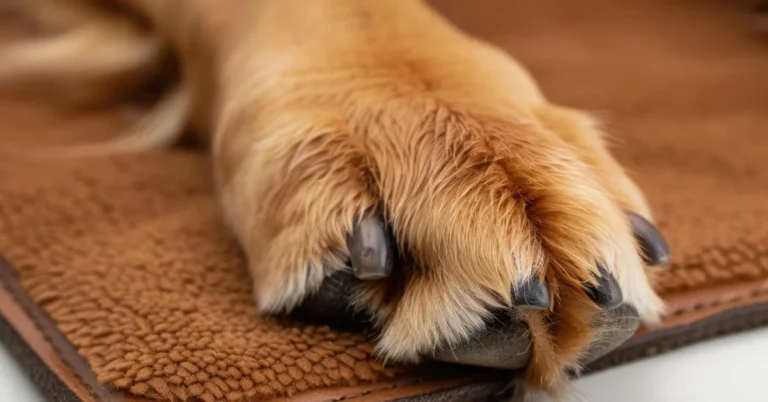
Ideally, when your dog is standing on a flat surface, their nails should not touch the floor. If you can hear their nails “clicking” on the hardwood, they are too long. Keeping them short reduces the leverage and makes it much harder for the nail to snag on carpets or roots.
Safe Walking Surfaces
Be mindful of where you exercise.
- High Risk: Metal grates (like city vents), boardwalks with gaps between planks, and rocky scree.
- Low Risk: Paved trails, flat grass, and packed dirt. If you are hiking on rough terrain, consider dog booties. They take some getting used to, but they offer physical protection against rock fissures that trap nails.
Regular Nail Inspection
Make it a habit to check your dog’s paws once a week. I do this during “cuddle time” so the dog associates it with belly rubs. Look for:
- Vertical hairline cracks (these are waiting to split open).
- Brittle, dry nails (often a sign of age or nutritional changes).
- Split tips that catch on fabric.
Activity Adjustments for Active Dogs
If you have a high-drive dog—a Border Collie who plays frisbee or a Labrador who sprints on asphalt—you need to be extra vigilant. “Weekend Warriors” (dogs who sleep all week and run hard on Saturday) are prone to injury because their nails aren’t worn down naturally, yet they are subjected to high impact. Warm up your dog before high-intensity fetch, and keep those nails trimmed short.
One prevention step that most nail care guides overlook is long-term parasite protection — fleas weaken a dog’s immune response and trigger the compulsive scratching that puts nails at constant risk. The Seresto Collar provides continuous flea and tick protection for up to 8 months without monthly applications — a low-maintenance option for dog owners who want consistent coverage without the monthly reminder. Available at BudgetPetCare.com with free shipping.
*Affiliate link — I may earn a commission at no extra cost to you.
Frequently Asked Questions About Dog Nail Injury Treatment
Here are the questions I answer almost daily in the exam room.
Can a dog walk with a broken nail?
Yes, but they shouldn’t go for long walks. Walking on a broken nail is painful, similar to walking with a rock in your shoe. Short potty breaks are fine, but rest is crucial for the first 48 hours. If the nail is dangling, every step causes the loose shell to wiggle against the nerve, which is excruciating.
Should I remove a loose nail?
Only if it is hanging by a thread. If the nail is literally dangling by a tiny piece of skin, you can quickly snip that skin with nail clippers. However, if the nail is still attached to the quick (the pink part), do not pull it. You will cause immense pain and severe bleeding. If it’s attached, tape it loosely or let a vet handle it under sedation.
Why does my dog’s nail keep bleeding?
The nail bed is vascular, and unlike skin, it doesn’t have much tissue to close over the wound. Every time your dog walks, the pressure increases in the paw, which can pop the clot loose. It’s also possible the dog is licking the clot away. This is why restricting activity and preventing licking is so vital for the first 24 hours.
Can a broken dog nail heal on its own?
Technically, yes. The body will heal the exposed quick by drying it out. The broken part of the nail won’t “reattach” (it’s dead keratin), but the new nail will eventually grow in to replace it. However, “healing on its own” without pain relief is suffering for the dog. Veterinary care is recommended to manage the pain and ensure the break is clean, even if the body does the rest of the work.
Final Veterinary Advice for Dog Owners
If you take one thing away from this guide, let it be this: Don’t panic.
A broken nail looks scary. There is often a shocking amount of blood. Your dog may cry out, which breaks your heart. But in the grand scheme of veterinary medicine, this is a very manageable problem.
Your job as an owner is to be the calm, safe presence your dog needs. Stop the bleeding, keep them quiet, and manage the pain. Accidents happen, even to the most careful owners. By keeping your dog’s nails trimmed and knowing how to use your first aid kit, you are already doing a fantastic job.
Give your pup a gentle pat from me, and here is to a speedy recovery.
Disclaimer: This article is written by a veterinary professional for educational purposes only. It does not replace a physical examination or specific medical advice from your veterinarian. If your dog is in severe pain, bleeding uncontrollably, or if you are unsure about the severity of the injury, please contact your local veterinarian immediately.
5 Comments