
Complete Dog Nail Treatment Guides
Dog Nail Care: What Every Owner Should Know
Nails are easy to forget about until something goes wrong. A dog limps in from the yard, there’s blood on the kitchen floor, or one toe looks swollen and red. In many of these cases, the problem started small and slowly got worse because nobody was watching for it.
Good dog nail care isn’t complicated. It comes down to three things: keeping nails at a healthy length, checking the paws regularly, and knowing which problems you can handle at home and which ones need a vet. That’s exactly what this site is here to help you with.
Why Your Dog’s Nails Matter More Than You Think
A healthy nail should sit just above the ground when your dog is standing. Once it touches the floor, every step pushes the toe upward and sideways. Over months, that changes how your dog stands and walks, and it puts extra strain on the joints in the feet, legs, and back. Older dogs and dogs with arthritis feel this the most.
Long nails also catch on carpet, grass, and gaps in decking. That’s how most broken and torn nails happen. Keeping nails short is one of the simplest ways to prevent painful injuries.
Dog Nail Trimming Guide: How to Do It Safely at Home
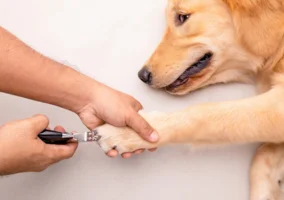
Inside every nail is the quick, a living core with blood vessels and nerves. Cutting into it hurts and causes bleeding, which is why so many owners feel nervous about trimming. With a calm routine and the right tools, it gets much easier.
- Pick a quiet moment, ideally after a walk when your dog is relaxed.
- Use sharp clippers or a grinder sized for your dog. Dull blades crush the nail instead of cutting it cleanly.
- Hold the paw firmly but gently, and press lightly on the toe pad to extend the nail.
- Take off small slices from the tip rather than one big cut.
- On white nails, stop well before the pink area. On black nails, watch the freshly cut surface. When a small dark circle appears in the center, you’re close to the quick, so stop there.
- Don’t forget the dewclaws. They don’t touch the ground, so they never wear down and can curl back into the skin.
- Finish with praise and a treat, even if you only managed one or two nails.
Most dogs need a trim every three to four weeks. If your dog’s nails have grown long, trim a little every week instead of cutting them back all at once. The quick gradually recedes with regular trims, which lets you bring the nails back to a healthy length over time.
If you’re new to trimming, the American Kennel Club’s step-by-step nail trimming guide is a good place to start.
Dog Nail Bleeding: What to Do Right Away
Even careful owners nick the quick now and then, and active dogs crack nails during play. A bleeding nail can look alarming because the blood spreads quickly, but in most cases it’s manageable.
Press styptic powder firmly into the tip of the nail and hold it there for a minute or two. If you don’t have styptic powder, plain cornstarch or flour works as a backup. Keep your dog still and calm, because walking around will start the bleeding again. Most nails stop within a few minutes. If the bleeding hasn’t stopped after about 10 minutes of steady pressure, call your vet.
VCA Animal Hospitals has a helpful first aid guide for broken nails that explains these steps in more detail.
Dog Nail Injury Treatment: Broken, Split, and Torn Nails
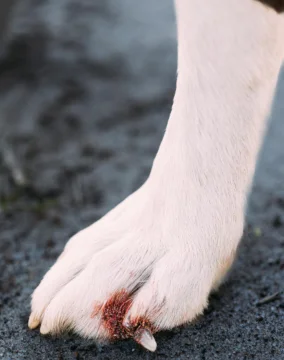
A broken nail is one of the most common paw injuries in dogs, and it’s genuinely painful. You’ll usually notice limping, licking, or a dog that suddenly won’t let you touch one foot.
If the nail is cracked near the tip, trimming carefully above the break, controlling the bleeding, and keeping the area clean is often enough. If the nail is hanging by a thread, split up toward the toe, or torn off completely, it’s best to let your vet handle it. These injuries often need pain relief, and sometimes the damaged piece has to be removed under sedation. Our dog nail injury treatment guide covers each type of break in more detail, including first aid and aftercare.
Dog Nail Infection Treatment: Bacterial and Fungal
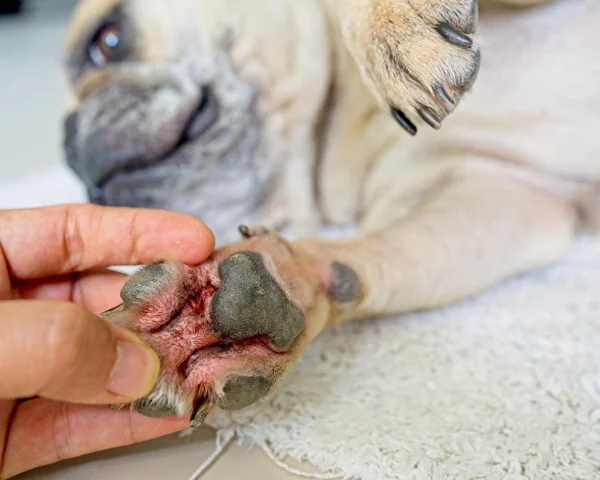
An injured nail can easily become infected, especially if your dog keeps licking it. Signs to watch for include swelling around the nail bed, redness, pus or discharge, a bad smell, and nails that look darker or thicker than usual.
Most nail infections in dogs are bacterial and usually respond well to cleaning plus antibiotics prescribed by a vet. A dog nail fungal infection is less common but harder to clear. Fungal nails tend to become brittle, crumbly, or misshapen, and treatment often takes several weeks of antifungal medication. Because bacterial and fungal infections can look alike, your vet may need to test the nail before choosing the right treatment. Please don’t use human nail fungus products on your dog unless your vet approves them.
If several nails are affected at once, mention it to your vet. That pattern can point to an allergy, an immune problem, or another underlying condition. Our dog nail infection treatment guide explains the causes, home care, and what to expect at the clinic.
Dog Nail Regrowth: How Long Does Healing Take?
If your dog has lost part or all of a nail, the good news is that it will usually grow back, as long as the base of the nail wasn’t badly damaged. Dog nail regrowth generally takes around six to eight weeks for the nail to reach its normal length, and sometimes longer in older dogs.
During this time, keep the toe clean and dry, check it daily for signs of infection, and limit rough play on hard surfaces. The new nail may look slightly different at first. If it grows back twisted, cracked, or unusually thick, have your vet take a look.
Honest Reviews of Dog Nail Care Products
The right tools make a real difference. A good pair of clippers cuts cleanly in one motion, a quality grinder lets you shape nails without getting close to the quick, and keeping styptic powder on hand turns a small accident into a non-event.
We review dog nail clippers, grinders, styptic powders, and paw care products by asking the same questions every owner asks: Is it safe? Is it easy to use? Will it suit my dog’s size? Is it worth the money? You’ll find our latest picks in the Reviews section, and over time we’ll be adding reviews of more products to help you care for your dog from nose to tail.
When to Call Your Vet
Home care is fine for many minor nail problems, but don’t wait if you notice any of the following:
- Bleeding that continues after 10 minutes of firm pressure
- A nail that is torn, hanging, or broken close to the toe
- Swelling, pus, or a bad smell around the nail bed
- Limping that lasts more than a day or two
- Several nails affected at the same time
- A nail that hasn’t started growing back after a few weeks
The guides on this site are written to help you understand what’s happening and act quickly. They’re not a replacement for an examination by your own veterinarian, who knows your dog’s history and can see the problem in person.
FAQs
How often should I trim my dog’s nails?
Most dogs need a trim every three to four weeks. A simple rule: if you can hear your dog’s nails clicking on a hard floor, they’re too long.
How do I stop my dog’s nail from bleeding?
Press styptic powder, cornstarch, or flour firmly into the nail tip and keep your dog still for a few minutes. If the bleeding hasn’t stopped after about 10 minutes, contact your vet.
Can I treat a broken dog nail at home?
Small cracks near the tip can often be managed at home with careful trimming and cleaning. Nails that are hanging, split toward the toe, or torn off completely should be seen by a vet.
What does a dog nail fungal infection look like?
Fungal nails often become brittle, crumbly, discolored, or misshapen. Because bacterial infections can look similar, a vet may need to test the nail to confirm the cause.
How long does it take for a dog’s nail to grow back?
Dog nail regrowth usually takes around six to eight weeks, and sometimes longer in older dogs. Keep the toe clean and watch for signs of infection while it heals.