
Table of Contents
In my ten years of clinical practice, I have seen many owners point to a specific spot on their dog’s paw and ask, “Doctor, why has this nail turned a different color?”
It is a valid question. We spend a lot of time looking at our dogs’ paws—wiping them after walks, trimming them (reluctantly), or just holding them while we relax. When a nail that used to be pearly white turns rusty brown, or a solid black nail develops a strange white streak, it is natural to worry. Is it dirt? Is it fungus? Is it something internal?
Nail discoloration is one of those symptoms that can range from completely benign to medically significant. Sometimes, it is simply a matter of old age or a stain from the backyard. Other times, the nail bed is trying to tell us something about the systemic health of the dog.
This article is designed to help you understand the causes of these color changes. We won’t be discussing treatments or broken bones here; instead, we are going to focus entirely on the “why”—explaining the various factors that can alter the pigment and appearance of your dog’s toenails.
What Is Considered Normal Nail Color in Dogs?
Before we can identify what is “abnormal,” we have to establish a baseline for what is normal. And in the canine world, “normal” is incredibly incredibly diverse.
Unlike humans, who generally have translucent nails with a pink nail bed, dogs have nails that are heavily influenced by their skin and coat pigmentation.
- White or Clear Nails: These are common in dogs with light-colored coats or white paws. You can clearly see the pink “quick” (the blood supply) running through the center. The shell itself is usually a cloudy white or cream color.
- Black or Dark Nails: These contain a high density of melanin. They appear solid black or dark charcoal. You cannot see the quick from the outside.
- Multi-Colored Nails: Many dogs, especially breeds like Beagles, Boxers, or Pit Bulls, have “marbled” nails. A single nail might be half black and half white. Some dogs have two black nails and two white nails on the same foot.
In my exams, I always look for symmetry and consistency. If a dog has always had black stripes on their nails, that is their normal. Discoloration becomes a topic of discussion only when the color changes from that dog’s established baseline.
What Does Nail Discoloration in Dogs Indicate?
The toenail is a unique structure. It is composed of keratin, a hard protein, which grows continuously from the nail bed. Because it grows slowly, the nail acts somewhat like a biological history book. A change in color at the tip might reflect something that happened months ago, while a change at the base (the root) indicates something happening right now.
Discoloration usually indicates a change in one of three areas:
- The Surface: Substances sticking to or staining the outside of the nail.
- The Structure: Changes in the quality of the keratin (the hard shell) itself.
- The Internal Environment: Changes in the blood flow, pigment production, or immune activity within the nail bed.
When I evaluate a discolored nail, I am essentially asking: “Is this color on the nail, or is it in the nail?”
Common Dog Nail Discoloration Causes
When a client brings in a dog with discolored nails, we usually find the culprit in one of the following categories.
Environmental Exposure
The most common cause of nail discoloration is simply the world your dog walks in. Dogs do not wear shoes; their nails are in constant contact with soil, grass, pavement, and moisture.
- Moisture and Saliva Staining: This is the number one cause of the “rusty” or brownish-red color owners see on light-colored nails. It is actually a reaction called porphyrin staining. Porphyrins are iron-containing molecules found in saliva and tears. If a dog licks their paws frequently due to allergies or habit, the saliva oxidizes on the nail, turning it a distinct rust color. This isn’t the nail changing pigment; it is a stain.
- Dirt and Debris: It sounds obvious, but impacted dirt can look deceptively like disease. Mud can pack into the grooves of a rough nail or under the cuticle, creating dark brown or black lines that don’t wash off easily with water.
- Walking Surfaces: I have seen city dogs with “graying” on the tips of their nails simply from walking on asphalt or chemically treated sidewalks. The constant friction can grind microscopic debris into the keratin, dulling the natural color.
Maintaining a healthy moisture barrier on the paw reduces both dryness-driven licking and environmental staining. Organic virgin coconut oil applied topically creates this barrier naturally — its fatty acids nourish dry paw skin, reduce itch signals that trigger licking, and provide mild protection against environmental moisture buildup. Raw Paws Organic Virgin Coconut Oil is single-ingredient and safe for daily topical use.
*Affiliate link — I may earn a commission at no extra cost to you.
Biting flies and mosquitoes are a less obvious but real contributor to paw licking — each bite triggers a localized itch response that dogs immediately address with their tongues. The porphyrins in that saliva are what stain the nail reddish-brown. K9 Advantix II is the only widely available OTC treatment that repels mosquitoes and biting flies alongside fleas and ticks.
*Affiliate link — I may earn a commission at no extra cost to you.
Nail Care and Hygiene Factors
How the nails are maintained plays a massive role in their color and clarity.
- Nail Overgrowth: When nails are too long, they don’t wear down naturally. The tip becomes old, brittle, and often discolored. Old keratin tends to turn opaque or yellow, losing that fresh, translucent look of a new nail.
- Grooming Habits: Lack of regular trimming can lead to a buildup of “dead” nail layers. Just as human heels can get thick and yellow if not exfoliated, dog nails can develop a thick, crusty outer layer that changes the perceived color from pink/black to a dull, chalky yellow or gray.
- Cleanliness: Dogs with hairy paws (like Spaniels or Retrievers) often trap debris against the nail bed. This trapped debris can create a moist environment that encourages surface staining on the base of the nail.
Natural Pigmentation and Age-Related Changes
Just like human hair goes gray, dog nails undergo pigment changes as they age. This is a natural physiological process.
- Age-Related Graying or Whitening: As a dog enters their senior years, the melanin production in their nails may slow down or become erratic. A dog that had solid black nails all its life might start developing charcoal or grayish streaks. Conversely, the clear parts of the nail might become cloudier and denser.
- Lentigo (Sun Spots): While we usually associate sun spots with skin, pigmentation spots can occur on the nail bed, visible through clear nails. These appear as tiny black or dark brown dots that move up the nail as it grows.
- Breed-Related Coloring: Some breeds are prone to changing pigment over time. I often tell owners of growing puppies that the paw color they see at 8 weeks might not be the paw color they see at 2 years. Pigment “filling in” is a common developmental change.
General Health-Related Influences
Sometimes, the nails reflect the internal state of the dog. While I cannot diagnose specific diseases here, I can explain how systemic health influences color.
- Non-Diagnostic Health Influences: The body prioritizes vital organs over nails. If a dog goes through a period of nutritional imbalance or systemic stress, the body may produce lower-quality keratin. This can result in horizontal lines or bands of discoloration (often lighter or white bands) that appear on all nails simultaneously.
- Immune System Activity: The interface between the nail and the skin (the claw fold) is a common site for immune activity. If the immune system is overactive, it can cause the nail bed to become inflamed. This inflammation often shows up as a deepening red or purple color at the very base of the nail, visible through the shell.
When Nail Discoloration Is a Cause for Concern
While many causes are benign, there are specific types of discoloration that trigger my “veterinary instincts” to investigate further.
Sudden Color Changes If a nail changes color overnight—for example, turning black or dark purple suddenly—this usually indicates bleeding under the nail (a subungual hematoma). Even if you didn’t see an injury, the color tells us that blood has pooled between the hard shell and the sensitive core.
Texture or Thickness Changes Discoloration rarely happens in isolation. If the nail is turning yellow and becoming crumbly, or turning brown and thickening into a claw-like shape, this suggests the structure of the nail is compromised. This is often the hallmark of something attacking the keratin, such as a microbial imbalance.
Odor or Sensitivity Color change accompanied by a distinct “corn chip” or musty smell is a classic sign of yeast proliferation. The yeast itself produces a reddish-brown pigment that stains the nail and the surrounding fur. Additionally, if the discolored spot is sensitive to the touch, it moves from a cosmetic issue to a medical one.
Behavioral Changes If your dog is obsessively licking a specific nail that has changed color, they are telling you that the spot is either itchy or painful. The discoloration in this case is likely a secondary effect of their saliva, but the cause of the licking needs to be found.
Observing Nail Discoloration at Home
You are the best observer of your dog’s health. You see them every day; I only see them once a year. Monitoring nail color effectively requires a bit of consistency.
What Owners Should Monitor:
- The Cuticle (Nail Bed): Is the skin around the nail red or stained?
- The Nail Length: Does the discoloration start at the root or the tip?
- Symmetry: Is just one nail affecting, or is it all of them? Systemic issues usually affect all paws; local issues (like stepping in something) usually affect one.
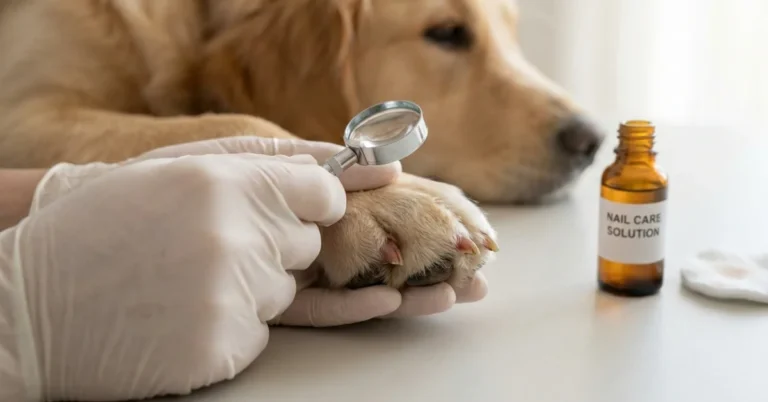
How Often to Check: I recommend a “Paw Audit” once a month, perhaps when you do your heartworm prevention or nail trimming. Good lighting is essential. Use a flashlight or bright sunlight to look closely at the nail texture.
Tracking Progression Over Time: If you notice a strange spot, take a picture. It is incredibly helpful for your veterinarian to see if a dark spot has grown, changed shape, or moved over the course of a month.
This article may contain affiliate links. We may earn a small commission at no extra cost to you.
What Dog Owners Should NOT Assume About Nail Discoloration
One of the dangers of Dr. Google is the tendency to jump to the worst-case scenario.
Not All Discoloration is Cosmetic Don’t assume that a yellow, crusty nail is just “dirty.” Scrubbing a nail that has a structural issue won’t fix it and might hurt the dog. If water and mild soap don’t remove the color, it’s part of the nail, not dirt.
Not All Discoloration is Dangerous Conversely, do not panic if you see a black line in your dog’s nail. Many owners rush in terrified of melanoma (a type of cancer). While nail bed tumors exist, they are relatively rare compared to simple pigmentation changes or staining.
Avoid Self-Diagnosis I have seen owners try to bleach their dog’s stained nails or apply harsh human antifungals because they assumed the color was a fungus. Please avoid this. Dog paws are sensitive, and incorrect chemicals can cause chemical burns or severe irritation.
Frequently Asked Questions
Is nail discoloration normal in dogs?
Minor discoloration, such as staining from dirt or age-related graying, is very normal. However, profound changes in color (like bright red, deep purple, or sudden black spots) are not “normal” and warrant a check-up.
Can a dog’s nail color change over time?
Yes, absolutely. Just as a dog’s muzzle goes gray, their nails can change opacity and pigment depth as they age. This is usually a slow, gradual process spread over years.
Should discolored nails be trimmed?
? If the nail is too long, yes. Sometimes, trimming the old, dead tip reveals healthier, normal-colored nail underneath. However, if the nail is painful, do not try to trim it yourself.
Can nail discoloration go away on its own?
If the discoloration is due to a stain (like mud or grass), it will fade or grow out. If the discoloration is caused by an internal health issue or a change in the nail matrix, it will likely persist until the underlying cause is addressed.
Final Veterinary Advice for Dog Owners
Nail health is often an overlooked window into a dog’s overall well-being. While a change in nail color is rarely an immediate emergency, it is a signal that deserves your attention.
My advice is to be an observant proactive owner. Keep the paws clean, keep the hair around the toes trimmed to reduce moisture buildup, and inspect the nails regularly. If you see a color change that looks odd, smells bad, or seems to bother your dog, simply point it out at your next veterinary visit.
We veterinarians appreciate it when owners notice these details. It helps us build a more complete picture of your dog’s health and ensures that we keep those paws happy for miles to come.
Disclaimer: This article is for informational purposes only and describes general veterinary observations regarding nail health. It does not constitute specific medical advice or diagnosis for your individual pet. If you have concerns about your dog’s health, please contact your local veterinarian.

2 Comments