
Table of Contents
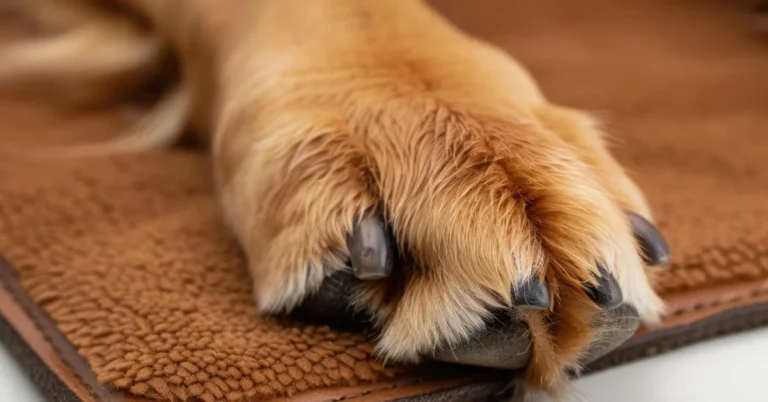
Walking into the living room to find blood spots on the carpet or seeing your dog holding a paw up in distress is a sinking feeling every pet owner dreads. When you look closer and see a dog nail torn halfway, the panic sets in quickly. As a veterinarian with over a decade in clinical practice, I see this specific injury almost weekly. It is distinct from a simple chip or a nail that has been ripped off completely—and in many ways, the halfway tear is more challenging for the dog.
A dog nail torn halfway is uniquely painful because the damaged portion of the hard shell is still attached to the sensitive tissue underneath. It acts like a lever; every time your dog takes a step, touches a carpet, or even licks the paw, that hanging piece of nail twists the exposed nerve endings.
This guide is designed to walk you through exactly what is happening, how to handle the immediate pain, and the steps required to help your dog heal. We are strictly focusing on the mechanical injury of a partial tear—managing the pain, the bleeding, and the repair—so you can navigate this stressful moment with confidence.
What Does It Mean When a Dog’s Nail Is Torn Halfway?
To understand why your dog is likely trembling or limping significantly, we have to look at the anatomy of the toenail. Unlike human fingernails, which sit on top of the skin, a dog’s nail surrounds a living core called the “quick.” The quick is a bundle of blood vessels and nerves.
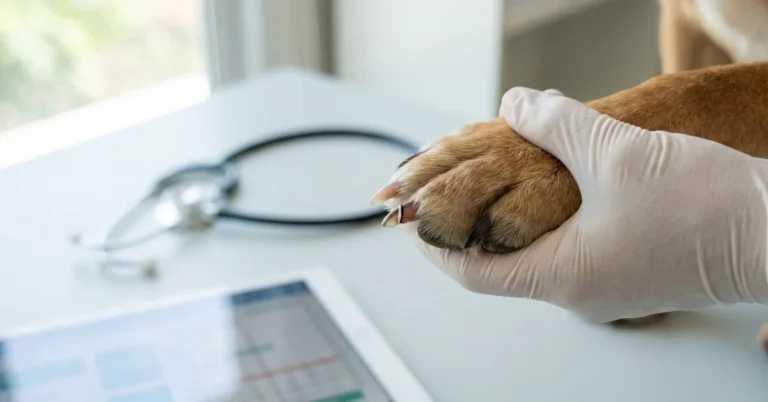
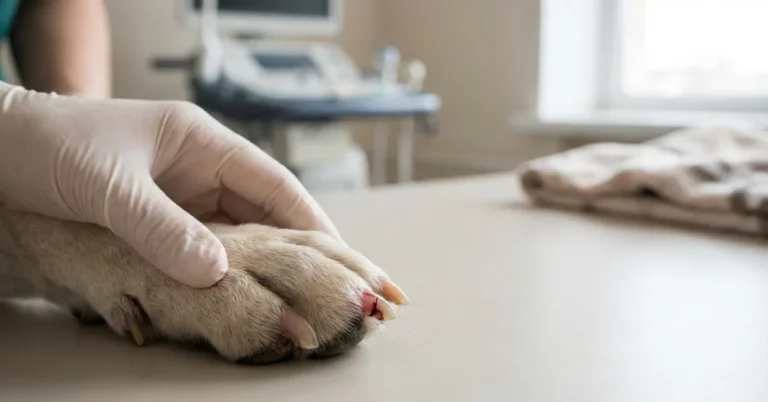
When a dog nail is torn halfway, the hard keratin shell has fractured. However, unlike a clean break where the tip falls off, a partial tear means the shell has split vertically or horizontally but remains attached at the base or the side.
Often, the break occurs right in the middle of the nail shaft. The broken piece is dangling, held on by the soft tissue of the quick or a thin strip of unbroken nail. This is a mechanical nightmare for the paw. The broken segment is no longer stable, but it hasn’t detached. Consequently, it moves independently from the base, creating friction and tension on the raw, exposed quick.
In my practice, I often describe this to owners as comparable to having a fingernail bent backward but not pulled out. It is an active, sharp pain rather than a dull ache.
Why a Halfway Torn Nail Is Painful and Risky
If your dog is acting dramatic, crying out, or refusing to walk, they are not overreacting. The level of pain associated with a dog nail torn halfway is intense.
Nerve Sensitivity and “The Lever Effect”
The quick is packed with nerve endings. In a healthy nail, the hard shell protects these nerves. When the nail tears halfway, that protection is gone. Worse, the hanging piece of nail acts as a lever. Gravity, movement, or contact with the ground pushes the broken shard against the exposed nerves. This constant agitation prevents the pain from subsiding.
Bleeding and Blood Vessel Exposure
The quick is extremely vascular. A tear halfway up the nail almost always slices into these blood vessels. Because the nail is not completely removed, the blood may pool inside the fracture or drip steadily. The presence of the attached nail segment can sometimes prevent the blood from clotting properly because the wound is constantly being reopened with movement.
Risk of Further Tearing
The biggest risk with a dog nail torn halfway is that the tear will continue to travel up the nail bed toward the toe itself. If the hanging piece catches on a rug loop or a deck board, it can rip the remaining attachment point higher up, potentially damaging the nail matrix (the growth plate). This turns a manageable injury into a complex one that could affect how the nail grows for the rest of the dog’s life.
Dog Nail Torn Halfway – What to Do First
The moments immediately following the injury are crucial. Your goal is not to perform surgery, but to stabilize the situation until you can get professional help.
Keep Your Dog Calm and Restrict Movement
Your dog’s instinct will be to pace, lick, or run away from the pain. Unfortunately, movement is the enemy of a dog nail torn halfway. Adrenaline might mask the pain momentarily, causing them to run on it, which causes the hanging nail to twist and tear further.
- Stop the walk immediately. If you are away from home, carry your dog if possible. If they are too heavy, keep them on a very short leash and walk slowly to the car.
- Isolate in a small area. Once home, put them in a crate or a small room with soft bedding. Avoid areas with deep-pile carpets or looped rugs, as the torn nail acts like a hook and will snag easily.
- Lower your energy. Your dog feeds off your anxiety. Speak in low, calm tones. If you panic at the sight of blood, they will panic too.
Managing Bleeding Safely (If Bleeding Occurs)
If the dog nail torn halfway is bleeding, it can look terrifying. Head wounds and paw wounds tend to bleed profusely, making the injury look worse than it is.
Some links in this guide may be affiliate links. This does not affect our content or recommendations
- Apply Gentle Pressure: Use a clean gauze pad or a washcloth. Press gently against the end of the toe. Do not squeeze the side of the nail where the break is, as this will cause severe pain.
- Styptic Powder: If you have Kwik-Stop or a similar styptic powder, this is the gold standard.
- Kitchen Remedies: If you don’t have a first aid kit, cornstarch or plain flour can help form a clot. Dip the nail into a small bowl of flour, or press a pinch onto the bleeding tip.
- Patience is Key: It takes several minutes for a clot to form on a nail. If you lift the cloth to check every 30 seconds, you break the clot and bleeding will restart. Hold pressure for a full five minutes.
Protecting the Torn Nail Temporarily
The goal here is strictly to prevent the nail from snagging on things while you transport the dog to the vet.
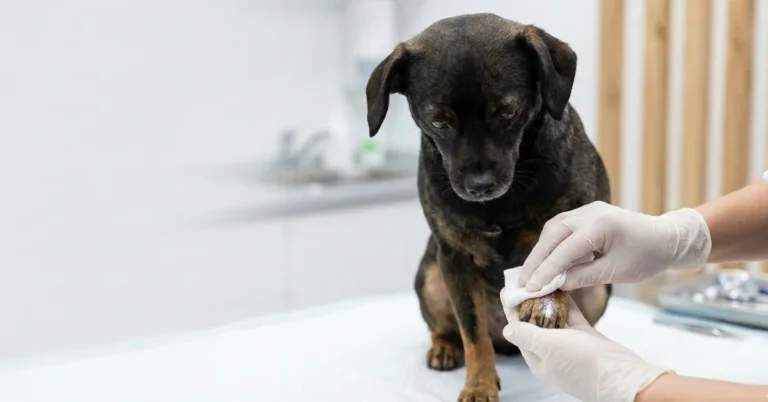
- The Sock Method: Place a clean, loose cotton sock over the paw. Secure it loosely at the ankle with medical tape or a cohesive bandage (like Vet wrap).
- Avoid Tightness: Crucial Warning: Do not wrap the paw tightly. You are not trying to act as a tourniquet. You just want a barrier between the torn nail and the world.
- No Ointments Yet: Avoid putting wet ointments on the nail right now; it makes the area slippery and harder for the vet to examine later.
What NOT to Do When a Dog’s Nail Is Torn Halfway
In my years of practice, I have seen many well-meaning owners accidentally make the situation worse by trying to fix it at home. Avoiding these common mistakes will save your dog a significant amount of pain.
Do Not Pull the Nail
It is incredibly tempting to look at the dangling piece of nail and think, “If I just pull it off, the problem is solved.” Do not do this. The attachment point is often much stronger than it looks, and yanking it can rip the quick right out of the nail bed. This causes excruciating pain and massive bleeding.
Do Not Cut the Torn Section Blindly
Unless the hanging piece is attached by a mere thread of dried tissue, do not attempt to cut it with your home nail trimmers. When a dog nail is torn halfway, the quick often swells into the broken space. It is very difficult for an untrained eye to distinguish between the dead shell and the living nerve. Cutting through the nerve is traumatic for the dog and may cause them to bite out of reflex.
Do Not Ignore the Limp
Some dogs are stoic. They might hide the pain or only limp slightly. Do not assume that because they aren’t screaming, the injury is minor. A dog nail torn halfway is mechanically unstable. Leaving it alone usually results in the nail drying out, curling, and eventually digging back into the toe or tearing further up the leg days later.
Do Not Let the Dog Walk Normally
Even if the bleeding stops, normal walking forces the toes to spread. This spreading motion puts pressure on the nail bed. Restricted activity is mandatory until the nail has been treated and has started the healing process.
Does a Halfway Torn Dog Nail Require a Vet Visit?
In the vast majority of cases, yes.
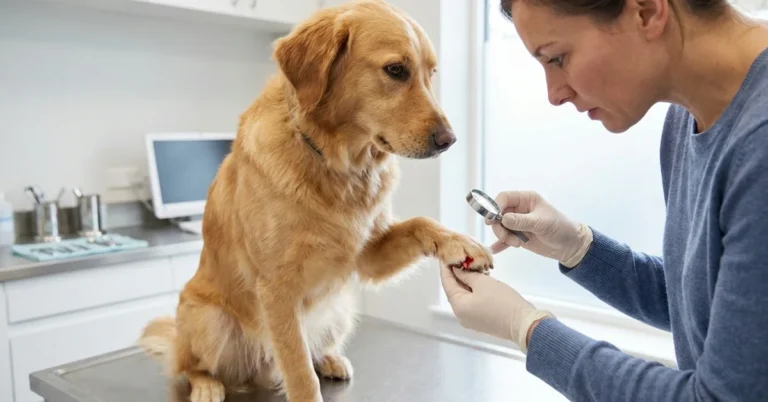
While we veterinarians try to avoid unnecessary visits, a dog nail torn halfway presents a mechanical problem that usually requires intervention. The damaged part of the nail—the piece that is flapping or twisted—needs to be removed to the level of the break.
Here is why this is a veterinary procedure:
- Pain Control: Trimming back a torn nail is painful because we are cutting near the raw nerve. In the clinic, we can use local anesthetic blocks or sedation to ensure your dog feels nothing during the procedure.
- Proper Resection: We need to cut the nail back cleanly, slightly past the break, to ensure the new nail grows in straight. A jagged edge left behind will cause the new nail to split as it grows out.
- Assessment of the Base: Sometimes a tear looks like it is halfway down, but a probe reveals the fracture goes all the way into the toe. A vet needs to assess the stability of the nail bed itself.
If the piece falls off on its own and your dog stops limping immediately, you might be in the clear. But if the nail is still attached and the dog is uncomfortable, professional removal of the damaged shell is the kindest, fastest route to relief.
Healing Expectations for a Halfway Torn Nail
Once the damaged, dangling portion of the nail has been removed, the relief is usually instantaneous. I often see dogs walk into the clinic on three legs and walk out on four once that source of friction is gone. However, the healing journey has just begun.
The “Exposed Quick” Phase (Days 1–7)
After the broken shell is trimmed, the tender quick will be exposed. It will look like a pink, fleshy nub. For the first few days, this is very sensitive to touch and temperature. Your dog may be hesitant to walk on gravel, snow, or salted sidewalks. The quick will slowly dry out and form a callous layer.
The Regrowth Phase (Weeks 2–8)
Nails grow slowly. It can take several months for the hard outer shell to fully regrow and cover the sensitive tissue. During this time, the nail is shorter than the others and won’t touch the ground. This is fine.
Realistic Timeframe
- Pain Relief: Immediate to 24 hours after the dangling piece is removed.
- Surface Healing: The exposed tissue hardens in about 5 to 7 days.
- Full Cosmetic Recovery: The nail will look normal again in 2 to 4 months, depending on how fast your dog’s nails grow.
Occasionally, a dog nail torn halfway causes damage to the germinal cells (the nail factory). In these cases, the nail might grow back with a ridge, a slight curve, or a thicker texture. This is usually cosmetic and doesn’t bother the dog, but it’s something to watch for.
How to Prevent Halfway Nail Tears in Dogs
While accidents happen, there are strategic ways to lower the odds of this injury occurring again.
Nail Length Maintenance
Long nails are the number one cause of tears. If you can hear your dog’s nails clicking on the floor, they are too long. A long nail acts like a hook; it catches on blankets, roots, and deck gaps. Regular trimming (every 3–4 weeks) keeps the nail short and reduces the leverage placed on the nail bed.
Walking Surface Awareness
Be mindful of where you walk. Metal grates, escalators, and widely spaced wooden decks are notorious for catching nails. If you are hiking in rocky terrain, check your dog’s paws frequently.
Carpet and Bedding Checks
Loop-pile carpets (Berber style) are famous for snagging dog nails. If your dog races through the house and turns sharply on this type of carpet, the lateral force can easily cause a dog nail torn halfway. Keeping nails smooth using a grinder (Dremel) rather than just clipping them can help, as it removes the sharp edges that tend to catch on fabric loops.
Frequently Asked Questions
Is a halfway torn nail serious?
It is rarely life-threatening, but it is serious in terms of pain and quality of life. The pain levels are high enough to cause behavioral changes, loss of appetite, and aggression in otherwise gentle dogs. It warrants prompt attention.
Can it heal on its own?
A dog nail torn halfway rarely heals “as is.” The broken piece will not reattach to the nail bed. It must eventually come off. Waiting for it to fall off naturally prolongs the pain and increases the risk of the tear worsening.
Should I trim a torn nail?
Only if you have experience, the dog is very calm, and the break is clearly visible with no quick inside the broken part. If you have any doubt, do not attempt it. The risk of hurting the dog and causing fear of future nail trims is too high.
How long does recovery take?
Once the broken piece is removed, the dog usually feels better within 24 hours. The sensitivity of the exposed tip lasts for about a week. Full regrowth of the hard shell takes months.
Final Veterinary Advice for Dog Owners
Seeing your dog in pain from a dog nail torn halfway is distressing, but I want to reassure you that this is a very manageable injury. It looks bloody and dramatic, but with the right approach, the prognosis is excellent.
The most important takeaway is to respect the pain. Do not force your dog to “walk it off” and do not try to be a surgeon at home if the nail is still firmly attached. Control the bleeding, keep them quiet, and let a professional handle the removal of the damaged shell. Your dog will forgive you for the trip to the vet, and they will thank you for the relief that comes after the hanging fragment is gone. Stay calm—you have got this.
One Comment