
Table of Contents
Finding yourself constantly checking your dog’s paws or noticing an unusual smell coming from their nails can be stressful. As a veterinarian, I sit down with worried owners almost every day who suspect “something is off” with their dog’s feet but can’t quite pinpoint the problem. Often, the culprit is a yeast infection specifically targeting the nail bed.
If you are dealing with this, take a deep breath. While nail bed infections (medically known as paronychia when they affect the tissue around the nail) can be stubborn and uncomfortable for your dog, they are highly manageable with the right approach.
The goal of this article is to walk you through exactly how we treat yeast infections in dog nails. We won’t be discussing broken nails, trauma, or bacterial issues here. We are going to focus entirely on understanding, treating, and managing yeast to get your dog’s paws healthy and comfortable again.
What Is a Yeast Infection in a Dog’s Nail?
To treat this effectively, you have to understand what we are fighting. Yeast is a type of fungus. The most common type we see in veterinary dermatology is Malassezia. The interesting thing about this organism is that it is a normal resident on your dog’s skin. In small numbers, it lives peacefully on the skin surface and causes no trouble at all.
However, the nail bed is a unique environment. The area where the claw emerges from the skin creates a fold—a warm, protected pocket. If the conditions in that pocket change—usually due to excess moisture, underlying allergies, or a weakened immune system—that harmless yeast sees an opportunity. It begins to reproduce rapidly, shifting from a peaceful resident to an irritating invader.
Unlike a simple surface rash, a yeast infection in the nail is protected by the hard keratin of the claw and the deep folds of the cuticle. This is why these infections rarely, if ever, resolve on their own. The yeast has found a “safe house” where it can thrive, and it requires targeted intervention to evict it.
Common Signs of a Dog Nail Yeast Infection
Yeast has a very distinct presentation. While every dog is different, after treating these cases for over a decade, I can usually spot—or smell—a yeast issue before I even put the sample under a microscope.
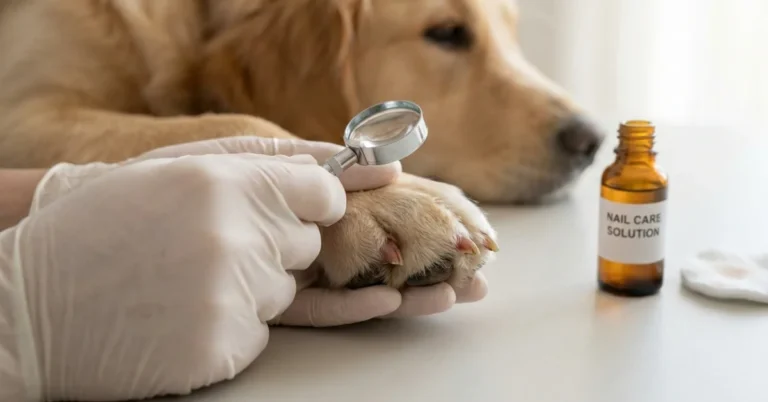
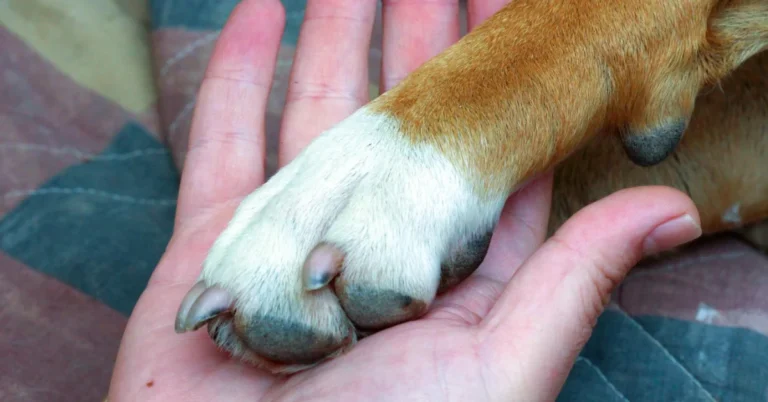
Visual Changes The most classic sign is a discoloration at the base of the nail. You might see a rust-colored or reddish-brown staining where the nail meets the skin. This isn’t usually dried blood; it is often a breakdown product of the yeast organism itself (porphyrins) staining the fur and nail. The nail itself might start to look different, sometimes appearing thicker, brittle, or oddly soft depending on how long the infection has persisted.
The “Frito” Odor Yeast has a very distinct smell. Most owners describe it as smelling like corn chips, old cheese, or musty bread. If you lift your dog’s paw and notice a heavy, sweet-musty odor coming specifically from the toes, yeast is the primary suspect.
Itch and Sensitivity Yeast is incredibly itchy. A dog with a nail infection will often be obsessed with their feet. You might see them meticulously licking the nail beds, chewing on their toes, or stopping on walks to nibble at their feet. If you try to touch the nail bed, they might pull away—not necessarily from sharp pain, but from a sensation of raw, irritated discomfort.
Dog Nail Yeast Infection Treatment – How It Is Managed
Managing a yeast infection in the nail is a process, not a quick fix. Because the nail bed is difficult to penetrate, we have to be strategic.
Confirming a Yeast Nail Infection
Before we start any treatment, we have to be sure it is actually yeast. This is where the veterinary exam is non-negotiable. There are other conditions, such as autoimmune disorders or deep fungal infections, that can mimic yeast. If we treat the wrong thing, your dog suffers longer.
In the clinic, I will typically perform “cytology.” I might take a piece of clear acetate tape and press it firmly against the skin at the base of the nail, or use a swab to collect debris from the claw fold. I then stain this sample and look at it under a high-power microscope.
I am looking for peanut-shaped organisms. If I see a large number of these “peanuts” (yeast) grouped together, we have our diagnosis. This step is crucial because it confirms that we need antifungal therapy rather than antibiotics or other medications.
Treatment Approach for Yeast Nail Infections
Once we confirm yeast, we move to treatment. The strategy generally falls into two categories: topical management and, in more severe cases, systemic (oral) management.
Some links in this guide may be affiliate links. This does not affect our content or recommendations
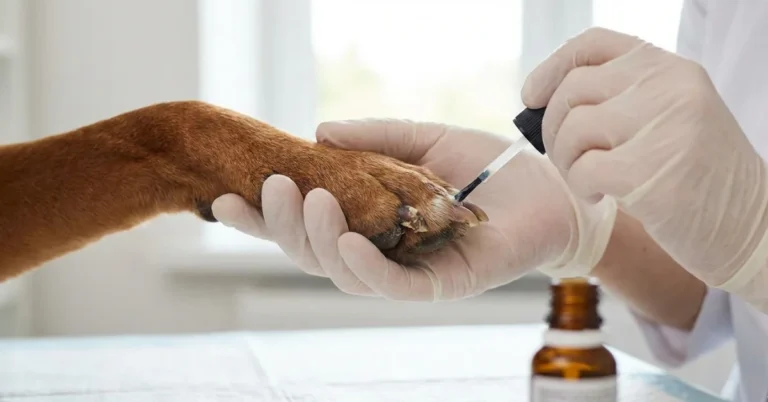
Topical Therapy For many dogs, treating the area directly is the best first step. Because the infection is tucked into the nail fold, simply rubbing a cream on the paw is rarely enough. We often use medicated soaks or specialized mousses that contain antifungal ingredients.
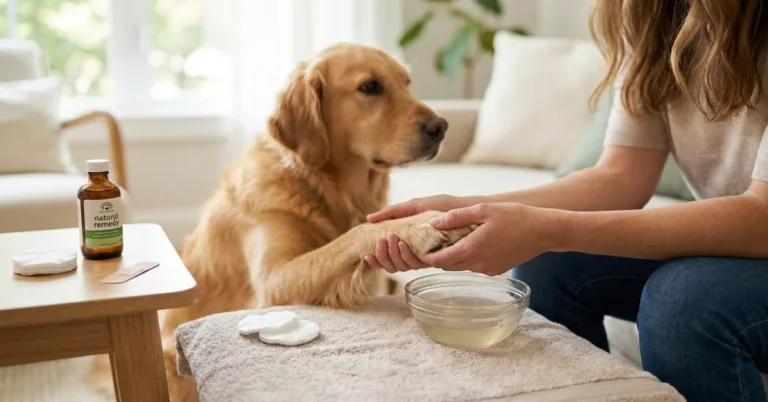
- The Soak Method: I often instruct owners to stand their dog in a shallow basin of medicated solution. This allows the liquid to penetrate deep into the cuticle and nail folds where creams can’t reach.
- Frequency: This is usually a daily commitment at the start. You are trying to drastically reduce the population of yeast.
Systemic Therapy If the infection has spread to multiple nails, is causing severe discomfort, or hasn’t responded to topical care, we look at oral antifungal medications. These are prescription drugs that work from the inside out, accumulating in the skin and nail bed to stop the yeast from reproducing. Oral treatment for nails is a commitment—it is never just for a few days. It must continue until the nail grows out sufficiently and the infection is fully cleared.
Supporting Nail Healing During Treatment
Medicine does the heavy lifting, but your home care determines how fast healing happens.
- Hygiene: You must keep the hair around the nails trimmed short. Long hair traps moisture and debris, creating a greenhouse effect for yeast.
- The Cone of Shame: I know no one likes the Elizabethan collar (cone), but it is vital. Every time your dog licks their infected nail, they are adding moisture and heat—the two things yeast loves most. They are also re-infecting the area with oral bacteria. Breaking the lick cycle is 50% of the battle.
What to Avoid During Yeast Infection Treatment
In my years of practice, I have seen treatment fail not because the medicine didn’t work, but because of common pitfalls.
Stopping Treatment Too Early This is the number one mistake. The paws might look better after ten days. The smell might disappear. But the microscopic yeast is likely still there, hiding deep in the keratin layers. If you stop now, it will roar back within a week. Always finish the full course prescribed by your vet, even if the paws look perfect.
Moist Environments Do not let your dog’s feet stay wet. If they go out in the rain or morning dew, you must dry them thoroughly. A damp paw inside a warm house is a yeast factory.
Random Over-the-Counter Products Please avoid using random anti-itch creams or human athlete’s foot products without asking your vet. Some human creams contain ingredients that are toxic if licked, or they might be mixed with steroids that can actually worsen a yeast infection if used incorrectly.
Guesswork-Based Care Trying to guess if it’s better is risky. We rely on follow-up cytology (looking under the microscope again) to tell us when to stop. Relying on “it looks okay” often leads to chronic, recurring issues.
How Long Does Yeast Nail Infection Treatment Take?
Patience is your best tool here. The nail unit has a slow blood supply and nails grow slowly.
- Mild Cases: If caught early and treated with strict topical therapy, you might see resolution in 2 to 4 weeks.
- Chronic/Severe Cases: For established infections deep in the nail bed, treatment often lasts 6 to 12 weeks.
You know treatment is working when the “rust” color stops spreading, the new nail growing in looks clean and normal, and the odor vanishes. If you are three weeks in and see zero change, or if your dog is still chewing their feet, we need to re-evaluate the plan. It might mean the yeast is resistant, or there is an underlying allergy preventing the immune system from helping us.
Can Dog Nail Yeast Infections Come Back?
The honest answer is yes, they can. In fact, they often do if we don’t address the root cause.
Remember, yeast is a normal resident. It only overgrows when the skin’s barrier is compromised. The most common underlying cause for recurrent nail yeast infections is environmental or food allergies (atopic dermatitis). The allergy causes inflammation in the paw, the paw sweats and gets itchy, the dog licks, and the yeast blooms.
If your dog gets yeast infections in their nails every spring, or every time they eat a certain protein, we aren’t just treating a nail infection—we are managing an allergic dog. Long-term care involves identifying these triggers so we don’t have to keep treating the nails over and over.
Preventing Yeast Infections in Dog Nails
Once you have cleared the infection, you want to keep it away. Here is my maintenance advice for owners prone to this issue:
- Strict Moisture Control: After baths, swimming, or rainy walks, dry the paws completely. Don’t forget the spaces between the toes and the nail folds.
- Regular Nail Trims: Long nails leverage the toe in a way that can irritate the nail bed, and they make it harder to clean the feet. Keep nails short and tidy.
- Paw Checks: Make it a habit to smell your dog’s feet (yes, really!) and check for that rust color once a week. Catching it when it’s just a slight discoloration is infinitely easier than treating a full-blown infection.
Frequently Asked Questions
Are yeast nail infections serious?
They are rarely life-threatening, but they are quality-of-life threatening. They cause constant, low-grade misery, itching, and inflammation. A dog with itchy feet is a stressed dog.
Can yeast spread to other nails?
Yes. Because the dog licks one itchy nail and then licks another, or scratches their ear with an infected foot, they can spread the yeast overgrowth to other parts of the body.
Is treatment always necessary?
Yes. The anatomy of the nail fold means the body struggles to clear these infections alone. Without help, the yeast will continue to thrive and the nail structure can eventually weaken.
When should I contact a veterinarian again?
If your dog seems lethargic, stops eating, or if the skin around the nail becomes swollen, hot, or oozes pus, call your vet immediately. These can be signs that a secondary bacterial infection has set in on top of the yeast.
Final Veterinary Advice for Dog Owners
Dealing with nail issues is frustrating. I know it is hard to watch your dog uncomfortable, and it is tedious to do foot soaks or administer medication for weeks on end. But I want to encourage you to stick with it.
Yeast is stubborn, but it is not invincible. With a correct diagnosis, a consistent treatment plan, and a little bit of patience, we can clear these infections up completely. Your dog relies on you to advocate for their comfort. If you suspect a yeast infection, skip the home remedies and get that cytology done so you can start the right path to healing today.
Disclaimer: This article is for educational purposes only and is not a substitute for professional veterinary care. Always consult a licensed veterinarian for diagnosis and treatment of your specific pet.
One Comment