
Table of Contents
As a veterinarian, one of the most common questions I get during routine wellness exams often comes up right as I’m lifting a paw to trim the nails. The owner stops me, points to the base of the nail, and asks, “Doctor, why is the nail turning that rusty, reddish-brown color? Is it bleeding? Is it dirt?”
If you have noticed this distinct color change on your dog’s nails, you are certainly not alone. It is a frequent observation, especially in dogs with lighter-colored nails or fur, though it happens to dogs of all coats. While it can be alarming to see your dog’s pristine nails turn a dark, muddy red, it is rarely a reason for immediate panic. However, it is a signal from your dog’s body that the local environment of the paw is out of balance.
This guide is dedicated entirely to understanding and managing this specific reddish-brown discoloration. We aren’t going to discuss broken nails or trauma here; instead, we will focus on the slow, creeping color change that often leaves owners baffled. My goal is to help you treat this issue at home by improving hygiene and environment, ensuring your dog’s paws stay healthy and comfortable.
What Does Reddish Brown Discoloration in Dog Nails Mean?
To treat the issue, we first have to understand what we are looking at. Healthy dog nails, regardless of whether they are black or white pigment, should have a relatively consistent appearance. The surface should be smooth, and the skin around the base (the nail bed) should be pale pink or pigmented skin color, not angry red or rusty.
When a nail turns reddish-brown, you are seeing a change in the nail’s surface chemistry and the accumulation of pigments. In veterinary medicine, we look at this as a marker of chronic exposure. It tells me that something in that nail’s environment—usually moisture or saliva—has been present for a long time.
This color change matters because it is essentially a “check engine” light. The nail itself might not be painful yet, and the dog might not be limping, but the discoloration is evidence that the natural barrier of the nail and skin is being challenged. If ignored, that discoloration can progress into more significant irritation.
Common Reasons Dog Nails Turn Reddish Brown
You might be wondering, “Why my dog?” In my years of practice, I’ve found that this specific discoloration rarely has a single cause. It is usually a “perfect storm” of small factors coming together.
Environmental Moisture
The most frequent culprit is water. Dogs that spend a lot of time walking on wet grass, swimming, or living in humid climates are prone to this. When the nail bed stays damp, the microscopic environment changes, leading to discoloration.
Nail Hygiene Imbalance
Nails are porous. If dirt, debris, or saliva (from licking) sits on the nail for extended periods, pigments can stain the keratin of the nail. Dog saliva, in particular, contains compounds called porphyrins that stain light fur and nails a deep reddish-brown color upon contact with air.
Lifestyle and Surface Exposure
I often see this in dogs with allergies who lick their feet, but also in dogs who simply have “hairy feet.” Excess fur between the toes acts like a wick, drawing moisture up from the ground and holding it against the nail bed for hours after a walk.
Age or Care-Related Changes
As dogs age, their immune system’s ability to manage the normal flora on their skin changes. You might notice older dogs developing this color more frequently simply because their grooming habits or immune defenses have shifted slightly.
Dog Nails Turning Reddish Brown Treatment – Practical Care Steps
Treating this discoloration is less about medicine and more about rigorous, supportive hygiene. We need to change the environment of the paw from “damp and stagnant” to “clean and dry.”
Improving Nail Hygiene
The first step in treatment is removing the buildup that is causing the stain.
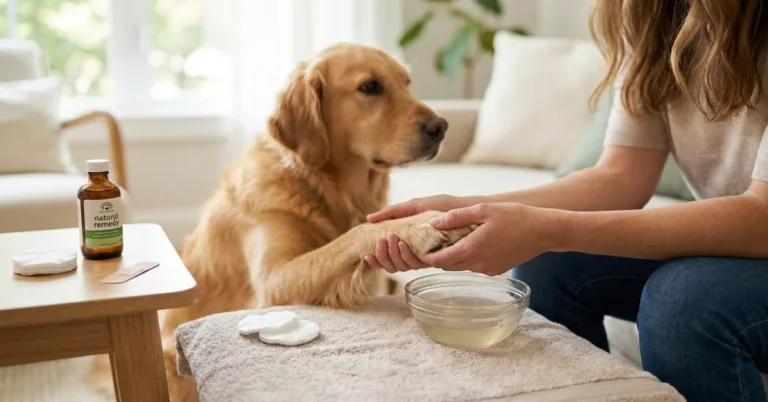
- The Gentle Scrub: You don’t need industrial scrubbers. A soft-bristled toothbrush is your best tool here. Once a day, use warm water and a mild, unmedicated dog shampoo to gently scrub the base of the nail. You are trying to physically lift away the debris and stained surface cells.
- Rinse Thoroughly: Soap residue can be just as irritating as dirt. Make sure you rinse the paw until the water runs completely clear.
- Trim the Fur: If your dog has “Grinch feet” (long tufts of hair covering the nails), carefully trim this hair back. You want air to be able to circulate around the nail bed. If you aren’t comfortable doing this, a professional groomer can do a “sanitary paw trim” for you.
This article may contain affiliate links. We may earn a small commission at no extra cost to you.
Keeping Nails Dry and Protected
If I could write one rule for treating reddish-brown nails on a billboard, it would be: Dryness is the Cure.
- The Towel Rule: Every time your dog comes in from outside—whether it’s raining or just morning dew—the paws must be dried. Not just a quick pat; get a towel in between the toes.
- Absorbent Bedding: Check where your dog sleeps. If they are drooling on their bedding or if the bedding is damp, they are marinating their nails in moisture all night. Wash bedding weekly in hot water and ensure it is bone-dry before they use it.
- Airflow: Avoid keeping socks or boots on the dog indoors unless absolutely necessary to stop licking. The nail needs oxygen to return to health.
Monitoring Nail Changes at Home
Home treatment requires observation. You want to see the color stop spreading.
- The “Line of Demarcation”: Watch the base of the nail (the cuticle area). As the nail grows, the new nail coming in should be the normal color. The reddish-brown part will not turn white again; it has to grow out. Improvement looks like a clean, normal-colored strip of nail emerging from the skin.
- Texture Check: Feel the nail. It should feel hard and smooth. If it starts to feel soft, spongy, or crumbly, the condition is worsening, and hygiene alone is not working.
What NOT to Do When Dog Nails Change Color
I have seen owners try some scary things to “bleach” the color out. Please, for your dog’s safety, avoid these common mistakes:
- No Bleach or Peroxide: Never use household bleach, hydrogen peroxide, or hair dye remover on your dog’s nails. These chemicals can cause severe chemical burns to the sensitive tissue of the nail bed and are extremely painful.
- Avoid Over-Cleaning: Scrubbing the paws five times a day is too much. You will strip the natural oils from the skin, causing cracking and actually inviting more debris in. Once a day is sufficient.
- Do Not Ignore “Licking”: If the discoloration is caused by your dog licking the paw, you cannot treat the nail without stopping the licking. The saliva is the source of the stain. Ignoring the behavior ensures the treatment will fail.
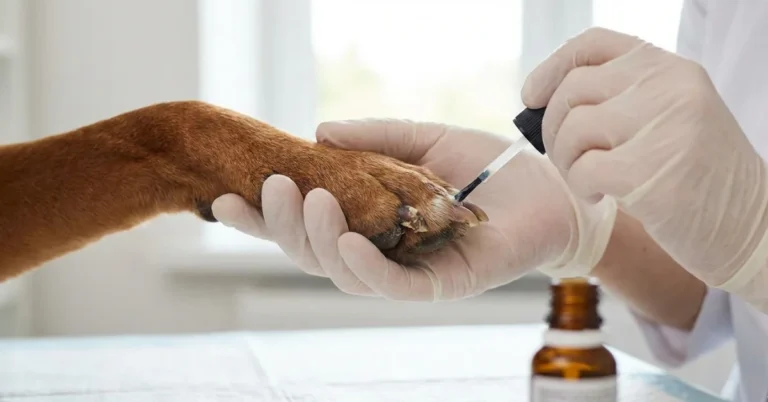
- Avoid “Internet Potions”: Vinegar soaks and baking soda pastes are popular online, but they can sting inflamed skin. Stick to gentle soap and water unless your vet directs otherwise.
When Reddish Brown Nails Need Veterinary Attention
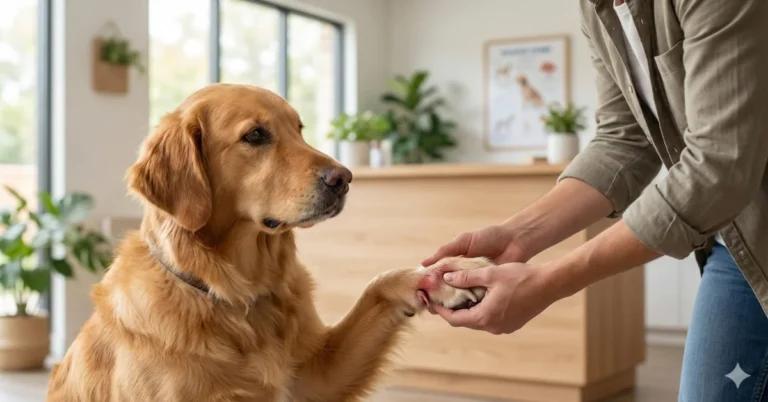
While this is often a cosmetic or hygiene issue, it can cross the line into a medical problem. You need to transition from home care to a veterinary visit if you see:
- Color Darkening: If the red turns to a black or greenish hue, this indicates a more complex overgrowth that needs medication.
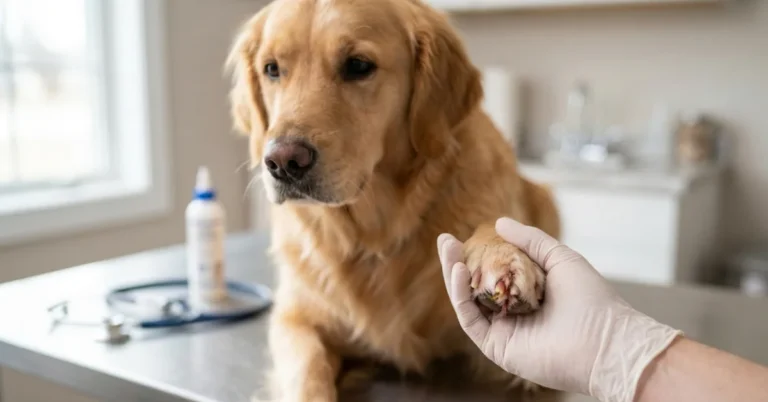
- Pain or Sensitivity: If your dog pulls the paw away when you try to clean it, or if they are limping. Discoloration alone shouldn’t hurt; pain means there is inflammation deep in the tissue.
- Odor: A strong, musty, or “corn chip” smell that doesn’t go away after washing is a sign that the microbial balance is significantly off.
- Discharge: Any oozing, bleeding, or moisture coming from the skin around the nail (not just water from outside) requires a vet visit.
How Long Does It Take for Nail Color to Improve?
This is the part that frustrates owners the most: Nails grow incredibly slowly.
Treating reddish-brown discoloration is a game of patience. Dog nails grow at a rate of roughly a few millimeters per week, and it varies by age and breed.
- The 2-Week Mark: You might notice the skin around the nail looks less angry and the smell (if any) is gone. The nail color will look identical.
- The 6-Week Mark: You should start to see a small band of healthy, normal-colored nail growing from the base.
- The 6-Month Mark: It can take months for the stained portion of the nail to completely grow out and be trimmed off.
If you are consistent with hygiene, you are winning, even if the nail still looks brown today. Trust the process of new growth.
Preventing Reddish Brown Nail Discoloration in Dogs
Once you have cleared up the issue, you don’t want it coming back. Prevention is just a simplified version of treatment.
- Routine drying: Make paw drying a permanent habit after wet walks.
- Regular Trims: Keep nails short. Long nails click on the floor and leverage the nail bed, creating small gaps where moisture can enter.
- Environment checks: If your dog licks their feet when bored, address the boredom with toys or training to prevent the saliva staining from starting again.
Frequently Asked Questions
Is reddish brown nail color normal in dogs?
It is “common,” but not necessarily “normal.” It indicates exposure to moisture or saliva. While a tiny amount of staining on an old dog might be benign, distinct rusty coloring usually suggests a hygiene imbalance that should be addressed.
Can nail color return to normal?
The stained part of the nail will generally not turn back to its original color. It is permanently dyed. However, the new nail growth should be normal. You eventually trim the discolored part away.
Should discolored nails be trimmed?
Yes, but be careful. The “quick” (blood vessel) inside might be harder to see if the nail is dark. Trim small amounts frequently to help remove the compromised nail tip, but do not try to cut off all the color at once, or you will make the nail bleed.
Can this issue return?
Absolutely. If the conditions (wet grass, licking, dirty bedding) return, the color will return. It is a management issue, not a “cure it once and forget it” issue.
Final Veterinary Advice for Dog Owners
Seeing your dog’s nails change color can be unsettling, but it is rarely an emergency. It is a nudge from your dog’s body telling you that the paw environment needs a little help.
In my practice, the owners who see the best results are the ones who focus on the basics: clean, dry, and protected. Don’t look for a magic pill or a quick-fix cream. The solution is in the daily habit of drying those paws and monitoring that new growth.
Take a deep breath, grab a clean towel, and start a fresh routine today. Your dog’s paws carry them through the world, and with a little extra care from you, they can do so comfortably and healthily.
Disclaimer: This article is for educational purposes only and does not constitute veterinary medical advice, diagnosis, or treatment. Always seek the advice of your veterinarian with any questions you may have regarding a medical condition.
2 Comments