
Dog Nail Infection Treatment: Causes, Symptoms & Care
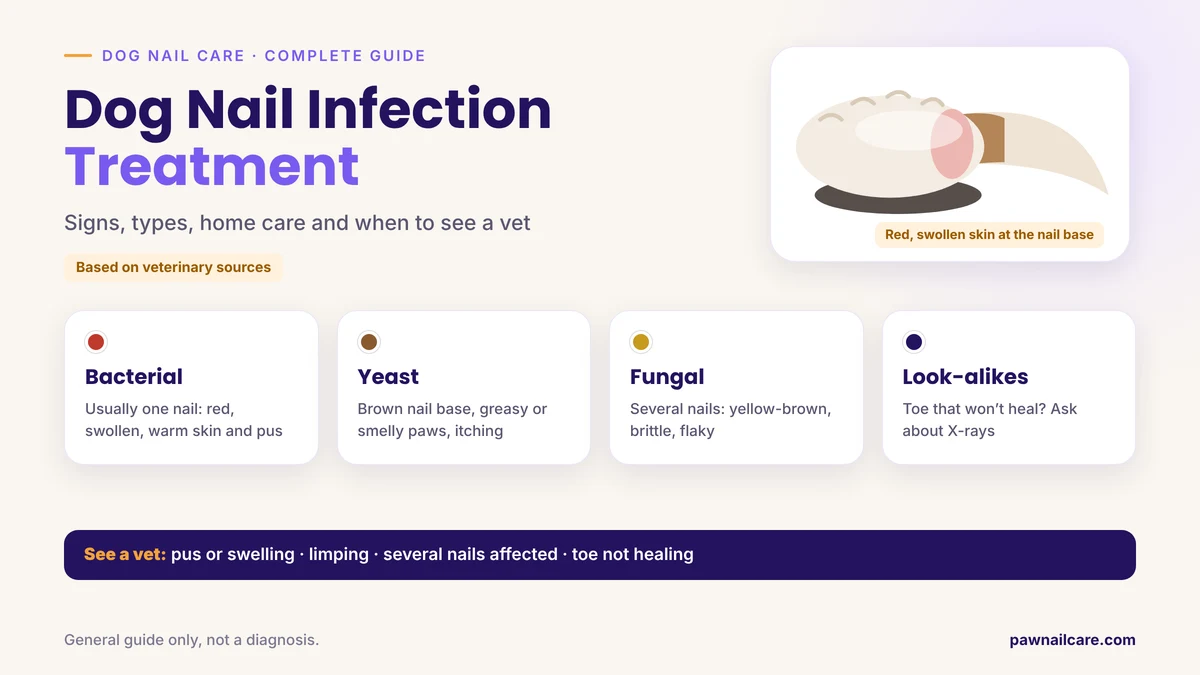
Table of Contents
This guide contains affiliate links. If you buy through them, we may earn a small commission at no extra cost to you. As an Amazon Associate I earn from qualifying purchases.
Your dog keeps licking one toe. The skin around a nail looks red and puffy, or a nail has turned brown and brittle. Maybe your dog yelps when you wipe their paws after a walk. These can all be signs of a nail infection.
Nail infections are painful, but most are very treatable, especially when caught early. They are not always “just an infection,” though. They are often linked to an injury, allergies or another health problem, and a few serious conditions can look like an infection. This guide covers everything in one place: causes, signs, types, diagnosis, home care, vet treatment, healing time and prevention.
Quick answer: Signs your dog’s nail may be infected
- Red, swollen or warm skin around the base of the nail
- Pus or discharge (yellow, white or bloody) at the nail base
- Licking, limping or pulling the paw away when touched
- Brown, yellow or discolored nails, often with a bad smell
- Brittle, cracked, flaky or misshapen nails
- What to do: keep the paw clean and dry, stop the licking, and see your vet. Most infections need a vet’s diagnosis and prescription treatment.
How we wrote this guide: The Dog Nail Care team researched this guide from published veterinary sources, which are listed at the end. We are dog owners and researchers, not veterinarians. Use this guide alongside your vet’s advice, not instead of it.
What Is a Dog Nail Infection?
A dog’s nail has two main parts:
- The keratin shell: The hard outer layer you trim. It is not alive.
- The quick: The living core inside the shell, with blood vessels and nerves. It is attached to the bone of the toe.
The skin fold around the base of the nail is called the nail fold or claw fold.
A dog nail infection happens when bacteria, yeast or fungi infect the nail, the nail bed or the skin around it. This often starts through a break in the nail or skin. Vets use two main terms:
- Paronychia: inflammation or infection of the skin fold around the nail. This is often what owners call a “nail bed infection.”
- Onychomycosis: a fungal infection of the nail itself.
Because the quick is attached to the toe bone, an infection that is left untreated can spread deeper and, in some cases, reach the bone. That is why nail infections should be checked by a vet.
| Type | Usually caused by | Typical signs |
|---|---|---|
| Bacterial nail bed infection (paronychia) | Bacteria, often after an injury | Usually one nail; red, swollen, warm skin; pus; pain |
| Yeast infection | Malassezia yeast, often with allergies | Brown nail base, greasy or smelly paws, itching, licking |
| Fungal nail infection (onychomycosis) | Yeast or, less often, ringworm fungi | Often several nails; yellow-brown, brittle, flaky nails |
| Look-alikes | Immune nail disease (SLO) or a toe tumor | Nails falling off on many paws, or one swollen toe that won’t heal |
Common Causes of Dog Nail Infections
Most nail infections are opportunistic. Something comes first, such as an injury, constant licking or long nails, and the infection follows. Trauma is the most common underlying cause.
Bacterial Infections
Bacteria live on the skin and in the environment. A crack in the nail, a torn nail or a small wound in the skin around it can let them in. The most common bacteria in nail bed infections are Staphylococcus. Bacterial infections are usually limited to one nail.
Fungal and Yeast Infections
- Yeast (Malassezia): This yeast normally lives on dog skin but can overgrow, especially in dogs with allergies. When it affects the skin fold around the nail, it often causes a brown color on the nail and nearby hair.
- Ringworm (dermatophytes): Despite the name, ringworm is a fungus. It mainly affects skin and hair but occasionally infects the nails, making them brittle and rough. Ringworm can spread to people and other pets.
Nail Trauma and Cracks
A broken, torn or split nail exposes sensitive tissue and gives germs an easy way in. Long nails snag and break more easily. If your dog has an injured nail, see our dog nail injury treatment guide for first aid steps that help prevent infection.
Poor Nail Hygiene And Moisture
- Overgrown nails: Nails that grow too long can curl into the paw pad, causing wounds that can become infected.
- Constant moisture: Paws that stay damp after walks, swimming or licking create a good environment for yeast and bacteria.
- Debris: Long hair between the toes can trap dirt and moisture against the nail fold.
Allergies and Licking
Allergies are a major driver of nail problems. Dogs with environmental or food allergies often lick and chew their paws, which keeps the area moist and damages the skin. Allergic skin is also more prone to yeast overgrowth. See our guide to dog nails turning reddish brown for more on licking and yeast.
Underlying Health Problems
Bacterial nail infections are usually a secondary problem. Besides trauma, vets also look for diseases such as hypothyroidism, Cushing’s disease, diabetes, allergies and immune-mediated diseases, especially if infections keep coming back or affect several nails.
Signs and Symptoms of an Infected Dog Nail
Dogs often hide pain, so you may need to look closely.
Redness and Swelling
Look at the skin where it meets the nail. In an infected nail, it may look red, puffy or shiny and feel warm compared with the other toes. In dogs with dark skin, redness can be hard to see, so compare the swelling with the other toes.
Discoloration (Reddish-Brown Nails)
A reddish-brown or rusty color at the nail base can come from saliva staining (from licking) or from yeast. Yellow to brown discoloration of several nails can point to a fungal infection. Our guides to dog nail discoloration causes and reddish-brown dog nails explain what different colors can mean.
Pain, Limping and Licking
- Licking: Focused licking of one toe or paw is a very common sign. Licking also keeps the area wet and can make the infection worse.
- Flinching: A dog that suddenly pulls away or reacts during paw wiping or nail trims may have a sore nail.
- Limping: Your dog may hold the paw up or avoid putting weight on it.
Odor or Discharge
- Pus: yellow or white discharge at the nail base
- Blood or bloody fluid oozing from the nail bed
- A strong or bad smell from the paw
- Crusts around the base of the nail
Changes in the Nail Itself
Nails may become thick, flaky, peeling, brittle, cracked, misshapen or loose.
Safety warning: A sore paw can make even a gentle dog bite. Be careful when you look, and have someone help hold your dog.
Types of Dog Nail Infections
Dog Nail Bed Infection (Paronychia)
This is an infection of the skin around the nail. It usually follows an injury to the nail or the skin around it. A bacterial infection usually affects one nail. The nail itself may look normal, but the skin around it is red, swollen and warm, and pus or blood may ooze from the nail bed. It is usually quite painful.
Fungal Nail Infections in Dogs (Onychomycosis)
A fungal nail infection usually affects several nails. Nails turn yellow to brown, may smell strongly, and can become thick, flaky or brittle. Most cases involve the yeast Malassezia; ringworm is a less common cause. Read more in our guide to dog nail fungal infection treatment.
Yeast Infections Affecting Dog Nails
Yeast infections are often greasy, smelly and itchy. They commonly cause brown discoloration at the nail base and are usually linked to allergies. If the allergy is not managed, the yeast often comes back. See our guide to dog nail yeast infection.
Ringworm of the Nails
Ringworm can make nails brittle and rough. It is contagious: people can catch it through contact with an infected animal’s skin or fur, or with contaminated objects such as bedding and towels. If your vet confirms ringworm, follow their cleaning advice, wash your hands after handling your dog, and wash bedding.
Conditions That Can Look Like an Infection
- Symmetric lupoid onychodystrophy (SLO): An uncommon immune-related condition where nails on several or all paws break, split or fall off and regrow brittle and misshapen. Secondary infections are common.
- Nail bed tumors: Tumors of the toe, such as squamous cell carcinoma and melanoma, can look very much like an infected toe. A swollen toe, a sore that won’t heal, or a nail that falls off and does not improve with treatment should be checked with X-rays and often a biopsy.
How Dog Nail Infections Are Diagnosed
Knowing whether you can watch and wait or need a vet is one of the hardest parts for owners.
When Home Observation is Enough
If the skin around one nail is only slightly red, there is no pus or discharge, your dog is not limping, and they let you touch the paw normally, you can keep it clean and dry and watch it closely for a day or two. If it does not clearly improve, or gets worse, see your vet.
When Veterinary Diagnosis is Required
- There is pus, discharge or bleeding from the nail bed
- The nail is loose, cracked or broken
- Your dog is limping or in pain
- The toe is swollen or hot
- Several nails are discolored, brittle or affected
- It keeps coming back or is not improving with treatment
Don’t remove any part of the nail or apply medication before your vet has looked at it.
Tests Vets May Use
- Physical exam: Your vet checks the paw and the leg and asks about any injury.
- Cytology: A swab or tape sample from the nail bed is looked at under a microscope to find bacteria, yeast or fungi.
- Culture: A sample is sent to a lab to identify the exact bacteria or fungus and which medicine will work. This is especially useful for infections that don’t respond to treatment.
- Wood’s lamp: A special light that can make some ringworm infections glow.
- X-rays: To check whether the bone of the toe is involved.
- Biopsy: For severe or non-responding cases, to rule out conditions such as tumors or immune disease.
Dog Nail Infection Home Treatment
Home care supports healing, either for a very mild problem or alongside your vet’s treatment plan. The goal is simple: clean, dry and protected. For more detail, see our guide to dog nail infection home treatment.
Cleaning Infected Nails Safely
- Gently wipe away dirt and crust with a soft cloth or gauze and warm water. Don’t scrub.
- If long hair is trapping moisture around the nail, carefully trim it or ask a groomer.
- Your vet may recommend chlorhexidine wipes or a dilute chlorhexidine solution for cleaning. Use it as your vet directs.
Antiseptic Soaks
Foot soaks are often recommended to clean the paw while you wait to see your vet or alongside treatment. Ask your vet which soak suits your dog.
- Epsom salt soak: Vets commonly suggest about 1/2 cup of plain Epsom salt in 1 gallon of warm water. Soak the paw for 5 to 10 minutes, once or twice a day, then rinse and gently pat dry. Don’t use scented bath salts. Some vets advise avoiding Epsom salt on open wounds, because it can irritate.
- Dilute povidone-iodine or chlorhexidine soak: Your vet can tell you how much to dilute it. Some vets suggest povidone-iodine soaks twice a day until your dog can be seen.
- Don’t let your dog drink the soak water.
Keeping the Nail Dry and Protected
- Dry thoroughly after every soak or walk, including between the toes and around the nail base.
- Protect the paw outdoors: A protective boot can help keep the paw clean and limit digging during walks. Remove it once you are back inside.
- Stop the licking: A cone (e-collar) is the most reliable way to stop your dog licking the infected nail.
- Keep walks short: Leash walks for potty breaks help avoid further injury while the paw heals.
Need help stopping the licking?
Our regrowth care list has soft cones, grip socks and a washable bed cover for the weeks the paw is healing. Follow your vet’s treatment plan first.
See the regrowth care list on Amazon (paid link)Dog Nail Bed Infection Home Treatment
A nail bed infection (paronychia) is painful and usually needs a vet. At home, while you wait for your appointment or alongside treatment:
- Soak and dry the paw as described above, if your vet agrees.
- Don’t squeeze any swelling or pus. You can push infection deeper or damage the area where the nail grows.
- Use only medicines your vet prescribes, and apply ointments after the paw is clean and dry.
What your vet may do: Treatment usually involves oral antibiotics or antifungals depending on the cause, pain relief, chlorhexidine cleaning at home, and sometimes a bandage that is left on for a few days until a recheck. Severe infections that don’t improve may need surgery.
Dog Nail Fungal and Yeast Infection Treatment
Fungal and yeast nail infections are usually slower and more stubborn than bacterial ones.
How Fungal/Yeast Infections Differ
They often affect several nails, cause brown or yellow discoloration and brittle nails, and are frequently linked to allergies. Bacterial infections more often affect one nail and cause sudden swelling and pus.
Why Treatment Takes Longer
The nail is hard keratin and grows slowly, about 0.7 to 2.1 mm per week. Infected nail has to grow out and be trimmed away, which takes months. Treatment for nail fungal infections usually means antifungal medication for several months, plus trimming the infected parts of the nail, foot soaks or topical antifungals, and sometimes a cone.
Importance of Consistency
- Finish the full course of any medication your vet prescribes, even if the paw looks better.
- Go to recheck visits. Your vet may need to repeat tests to confirm the infection is gone before stopping treatment.
- Treat the cause. If allergies are behind a yeast problem, managing the allergy is the key to stopping it coming back.
What NOT to Do When Treating an Infected Dog Nail
Dangerous Home Remedies
- Hydrogen peroxide: Don’t use it on the nail bed. It can irritate the nail bed and damage healthy tissue.
- Tea tree oil and other essential oils: Never put pure tea tree oil on your dog. As little as 7 drops of 100% tea tree oil has caused severe poisoning in dogs, and dogs can absorb it through the skin or lick it off.
- Bleach: Never soak a dog’s paw in bleach, even diluted.
- Human antifungal creams: Don’t use them without asking your vet. Dogs lick them off, and some ingredients are not safe to swallow.
Over-Trimming
Don’t try to trim an infected nail short to “get rid of the infection.” It is painful, can cut into the quick and cause bleeding, and can make things worse. Let your vet trim the infected nail.
Ignoring Pain Signs
If your dog is limping, shaking, hiding or not eating, the pain is significant and needs a vet. Never give human painkillers. Acetaminophen (Tylenol) and ibuprofen (Advil) can be toxic to dogs. Your vet can prescribe a dog-safe pain reliever.
How Long Does a Dog Nail Infection Take to Heal?
Healing time depends on the type of infection.
Bacterial Infections
Most nail bed infections resolve in about 7 to 10 days with proper treatment. If the nail was broken or removed, the soft tissue heals first, but the nail can take several weeks or months to regrow. See dog nail regrowth stages.
Fungal and Yeast Infections
These take longer. Treatment for fungal nail infections often lasts several months, and the infected part of the nail has to grow out. Because nails grow slowly, it can take up to 6 to 8 months for a nail to look normal again.
| Type of infection | Rough healing time |
|---|---|
| Bacterial nail bed infection | About 7 to 10 days with treatment |
| Fungal or yeast nail infection | Treatment often lasts several months |
| Nail regrowth after loss or removal | Several weeks to months; up to 6–8 months to look normal |
Signs of Improvement vs. Trouble
Good signs:
- Less licking and limping
- Redness and swelling going down
- No more discharge
- Healthy new nail growing from the base
Signs of trouble: The paw is more swollen after several days of treatment, redness is spreading up the leg, discharge continues, or the toe simply is not healing. Tell your vet. The infection may need a different medicine, there may be something stuck in the tissue, or there may be another cause. Any swollen toe that does not heal with treatment should be checked with X-rays and possibly a biopsy, because nail bed tumors can look like infections.
How to Prevent Dog Nail Infections
Most nail infections start with a weakness, such as an injury, moisture or licking. These habits help prevent them:
Proper Nail Trimming Habits
- Keep nails short: If you hear clicking on hard floors, they are too long. Use our nail trim schedule calculator to plan regular trims.
- Trim small amounts regularly rather than a lot at once.
- Use clean, sharp tools: Sharp dog nail clippers cut cleanly. Clean your clippers after use, especially if you have more than one dog or your dog has had a nail infection. See our guide to the best dog nail clippers.
Keeping Nails Clean and Dry
- Dry paws after walks, especially after rain, snow or wet grass. Get between the toes.
- Trim long hair between the toes so the paws dry faster.
Regular Inspection Tips
- Check each toe once a week for cracks, splits or loose nails.
- Look for redness, swelling or brown staining at the nail base.
- Notice any new smell, licking or limping.
Diet and Immune Health Support
- Manage allergies: If nail problems keep coming back, ask your vet about allergies. Treating them is often the key to prevention.
- Feed a complete, balanced diet. If nails are often brittle or break easily, talk to your vet, since an underlying health problem may be the cause.
- Ask before adding supplements such as fish oil. Your vet can tell you whether they suit your dog.
What About Coconut Oil?
Coconut oil is not a treatment for nail infections, and the evidence for its benefits in dogs is weak. Don’t put it on an infected nail unless your vet recommends it. Once the paw has healed, some owners use a small amount on dry, cracked paw pads. If you want to try it, this is the one we link to:
Affiliate link — we may earn a commission at no extra cost to you. Price may change.
When to See a Vet Immediately
- Severe pain: your dog can’t put weight on the foot, is shaking or panting, or won’t let you near the paw
- Spreading redness or swelling moving up the foot or leg
- A broken or torn nail with the quick exposed
- Bleeding that won’t stop despite pressure and styptic powder
- Your dog seems unwell, such as not eating, very tired or feverish
- A swollen toe that isn’t improving with treatment
Dog Nail Infection Care Kit
These basics make it easier to follow your vet’s home-care plan:
- Chlorhexidine wipes or solution (use as your vet directs)
- Plain, unscented Epsom salt and a small basin for soaks
- Clean towels and gauze for drying
- A cone (e-collar) to stop licking
- A protective dog boot for walks
- Sharp dog nail clippers for regular trims once healed
Stocking up on paw care basics?
Our dog care list has an absorbent paw towel, nail clippers, a pet first aid kit and a few everyday essentials many owners keep at home.
Browse the dog care list on Amazon (paid link)Our Dog Nail Infection and Paw Health Guides
This page is our main guide to dog nail infections. For more detail, see these guides:
- Dog nail fungal infection treatment: fungal infections of the nail
- Dog nail yeast infection: Malassezia yeast and allergies
- Dog nail infection home treatment: safe home care steps
- Dog nail discoloration causes: what different nail colors can mean
- Dog nails turning reddish brown: licking, yeast and care steps
- Dog nail injury treatment: first aid for broken and torn nails
- Dog nail regrowth stages: how a nail grows back after loss
- Dog nail trim schedule calculator: plan regular trims
Frequently Asked Questions About Dog Nail Infection Treatment
Can dog nail infections heal on their own?
Rarely. Very mild redness may settle if the paw is kept clean and dry, but most true infections need a vet’s diagnosis and prescription treatment. Left untreated, nail infections can spread and cause serious damage to the skin and nail.
What does an infected dog nail look like?
The skin around the nail may be red, swollen and warm, with pus or blood at the nail base. The nail may be discolored (yellow, brown or reddish), thick, flaky or brittle. Your dog may lick the toe, limp or pull away when you touch it.
Are dog nail infections contagious?
It depends on the cause. Bacterial and yeast infections are generally not considered contagious in normal contact, but always wash your hands after handling an infected paw. Ringworm is contagious to people and other pets, so follow your vet’s cleaning advice if ringworm is diagnosed.
Can I treat a dog nail infection at home?
You can support healing at home with gentle cleaning, soaks your vet approves, keeping the paw dry and stopping the licking. But most infections need prescription medicine, so see your vet, especially if there is pus, swelling, limping or several nails affected.
Can I walk my dog with a nail infection?
Yes, short leash walks are fine. Protect the paw with a clean boot and avoid mud and digging. Remove the boot when you get home and dry the paw well.
Can I use human antifungal products on my dog?
Ask your vet first. Dogs tend to lick creams off, which makes them less effective and may upset the stomach, and some products are not safe to swallow. Your vet can prescribe a product designed for dogs.
Final Thoughts
Nail infections are common, painful and very treatable. Most start with something simple, such as an injury, moisture or licking, and most clear up well with the right treatment.
Keep the paw clean and dry, stop the licking, and see your vet rather than relying on home remedies. And if a toe stays swollen or won’t heal despite treatment, ask your vet about X-rays, because not every “infected toe” is just an infection.
Sources
We used these veterinary and expert sources for this guide:
- PetMD – Nail Infections in Dogs (Brittany Kleszynski, DVM)
- dvm360 – Nail Diseases (Proceedings)
- Clinician’s Brief – Claw & Claw Bed Diseases in Dogs and Cats
- FirstVet – Abnormal Nail Color in Dogs
- University of Illinois College of Veterinary Medicine – Malassezia Dermatitis in Dogs and Cats
- American Kennel Club – Ringworm in Dogs
- California Department of Public Health – Ringworm and Pets
- VCA Animal Hospitals – Symmetric Lupoid Onychodystrophy in Dogs
- VCA Animal Hospitals – Squamous Cell Carcinomas in Dogs
- Preventive Vet – Nail Diseases in Dogs and Cats (Alexandra Gould, DVM, DACVD)
- American Kennel Club – Dog Wound Care
- Pet Poison Helpline – Tea Tree Oil
- Merck Veterinary Manual – Poisoning from Human Over-the-Counter Drugs
- Kinship – Can I Put Coconut Oil on My Dog?
Disclaimer: This guide is for general information only. It was written by the Dog Nail Care team, who are not veterinarians, and it is not a substitute for advice, diagnosis or treatment from your veterinarian. If you think your dog has a nail infection, please see your veterinarian.


6 Comments