
Dog Nail Yeast Infection Treatment | Vet-Approved Steps That Actually Work
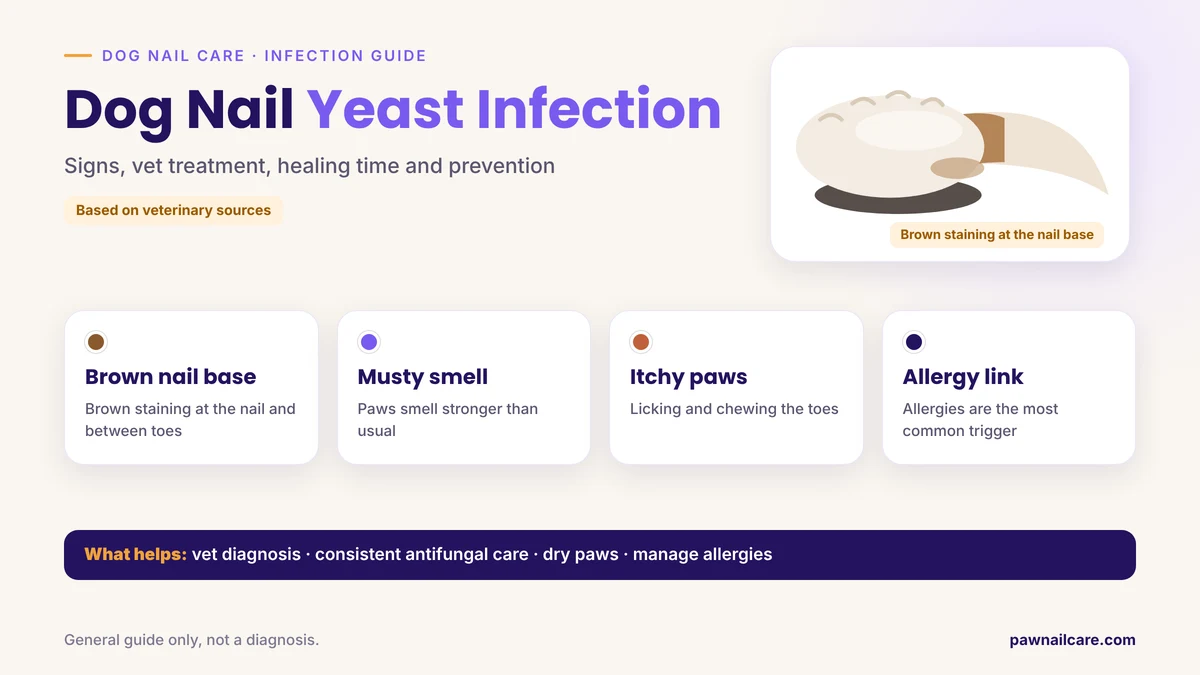
Table of Contents
This article contains affiliate links. If you buy through them, we may earn a small commission at no extra cost to you. As an Amazon Associate I earn from qualifying purchases.
Your dog keeps licking their toes, the nail bases have turned brown, and their paws have a musty smell. A yeast infection around the nails is a common reason for all three.
Yeast nail infections can be stubborn and very itchy, but they are manageable with the right diagnosis and a consistent plan. This guide focuses on yeast: what it is, how to recognize it, how vets treat it, how long treatment takes and how to stop it from coming back. For bacterial infections and other nail problems, see our main guide to dog nail infection treatment.
How we wrote this guide: The Dog Nail Care team researched this article from published veterinary sources, which are listed at the end. We are dog owners and researchers, not veterinarians. Use this guide alongside your vet’s advice, not instead of it.
What Is a Yeast Infection in a Dog’s Nail?
Yeast is a type of fungus. The yeast behind most dog skin and nail yeast problems is Malassezia, usually Malassezia pachydermatis. It normally lives on healthy dog skin, including the skin fold around the nails, without causing trouble.
Problems start when it overgrows. Warm, humid conditions, skin damage, allergies, hormone diseases and immune problems can all let the yeast multiply. When the overgrowth affects the skin fold around the nail, vets call it Malassezia paronychia (nail fold inflammation). It often comes with yeast on the rest of the paw as well.
Because the yeast is a normal resident, the real question is usually why it overgrew. That is why finding the underlying cause, most often allergies, is a big part of treatment.
Common Signs of a Dog Nail Yeast Infection
Visual Changes
The classic sign is brown discoloration of the nail near its base and of the hair between the toes. In long-standing cases, the nail can even turn black. The skin around the nail and between the toes may be red, greasy or scaly.
Some of the reddish color on paws is also saliva staining from licking. Dog saliva contains pigments called porphyrins that stain light fur and nails rusty red. Many itchy dogs have both. Our guide to dog nails turning reddish brown explains the difference.
Odor
Yeast-infected paws often have a strong, musty odor that is stronger than the normal smell of your dog’s feet.
Itch and Sensitivity
Yeast is very itchy. Dogs may lick the nail beds, chew their toes, or stop on walks to nibble their feet. Some dogs are hypersensitive to the yeast and itch badly even with a fairly small number of yeast organisms.
Signs That Need a Vet Sooner
- Pus, swelling, heat or pain at the nail base (a sign of a bacterial infection on top of the yeast)
- Limping or not wanting to put weight on the paw
- Nails that are cracking, loose or falling off on several paws
- One swollen toe that is not improving
Dog Nail Yeast Infection Treatment – How It Is Managed
Managing a yeast nail infection is a process, not a quick fix. It starts with a proper diagnosis.
Confirming a Yeast Nail Infection
Other problems can look like yeast, including bacterial infections, ringworm and other fungal infections, immune-related nail disease and, rarely, toe tumors. So a vet exam is important before treatment starts.
The main test is cytology. Your vet presses clear tape against the skin at the nail base, or uses a swab to collect debris from the claw fold, stains the sample and looks at it under a microscope. Malassezia has a typical “footprint” or peanut shape, so finding many of them in the sample, together with the right signs, confirms the diagnosis. This tells your vet that antifungal treatment is needed rather than, or as well as, antibiotics.
Treatment Approach for Yeast Nail Infections
Treatment usually involves topical therapy, oral medication or both, plus treating the underlying cause. Your vet will choose the plan.
Topical Therapy
Topical treatment is the preferred approach for yeast on the paws, and it can be the only treatment needed in mild or local cases. Common options contain antifungal azoles such as miconazole or ketoconazole, or chlorhexidine, ideally combined with an azole.
- Forms: shampoos, wipes, sprays, mousses, lotions, creams and rinses.
- How often: medicated shampoos are often used once or twice a week, while wipes, sprays or lotions are often used every 12 to 24 hours. Follow your vet’s exact schedule.
- Foot soaks: your vet may suggest standing the paw in a shallow basin of a prescribed antifungal or antiseptic solution so it reaches the nail folds. Use only the medicated soak products and dilution your vet recommends.
Systemic (Oral) Therapy
If many nails or a large area of skin are affected, or topical treatment is not working, your vet may prescribe an oral antifungal together with topical care. Daily oral treatment usually lasts at least 30 days, and some schedules continue for 4 weeks or longer. Your vet should recheck your dog before stopping.
Treating the Underlying Cause
Identifying and treating the underlying disease is key to clearing the yeast and preventing it from returning. Your vet may look for allergies (environmental, food or flea), hormone problems such as hypothyroidism, or other skin conditions.
Supporting Nail Healing During Treatment
Medicine does the main work, but home care makes a big difference.
- Keep paws dry: Dry the feet well after walks, baths and soaks, including between the toes and around the nail folds.
- Trim paw hair: Keep long hair between the toes short so moisture and debris don’t stay trapped against the nails.
- Stop the licking: A cone (e-collar) keeps your dog from licking, which adds moisture and irritates the skin. It also stops your dog licking off medicated products.
- Follow the schedule: Apply treatments exactly as often as your vet says, even when the paws start to look better.
Drying and trimming paws at home?
Our dog care list has an absorbent paw towel, a small paw hair trimmer, nail clippers and a few everyday essentials many owners keep at home.
Browse the dog care list on Amazon (paid link)What to Avoid During Yeast Infection Treatment
Stopping Treatment Too Early
The paws may look and smell better before the yeast is fully under control. Finish the full course your vet prescribed and go to recheck visits. Your vet may repeat cytology before telling you to stop.
Moist Environments
Don’t let your dog’s feet stay damp. Warm, humid conditions help yeast grow.
Random Over-the-Counter Products
Avoid human anti-itch creams, athlete’s foot products and home remedies unless your vet approves them. Dogs lick them off, some ingredients are not safe to swallow, and some products contain steroids that should only be used under a vet’s direction. Never use tea tree oil or other essential oils on your dog’s paws.
Guesswork-Based Care
“It looks okay” is not always enough. If the itching keeps coming back, ask your vet for a recheck rather than restarting old medicine on your own.
How Long Does Yeast Nail Infection Treatment Take?
Treatment time depends on how severe the infection is and whether the underlying cause is under control.
| Situation | What to expect |
|---|---|
| Mild, local yeast on the paws | Topical treatment for several weeks, then a recheck |
| Widespread or stubborn yeast | Oral antifungal for at least 30 days (often 4 weeks or longer), plus topical care |
| Nail discoloration | Stained nail grows out slowly, about 0.7 to 2.1 mm per week; full grow-out takes months |
You will usually notice less itching and odor before the nails look normal. Brown discoloration in the nail itself has to grow out, so watch the new nail at the base. See dog nail regrowth stages for how nails grow.
Signs treatment is working: less licking and chewing, less redness and odor, and clean, normal-colored nail growing in at the base.
Signs to recheck with your vet: no improvement after a few weeks, itching that returns as soon as treatment stops, or new signs such as swelling, pus or limping.
Can Dog Nail Yeast Infections Come Back?
Yes, and they often do if the underlying cause is not managed.
In dogs, yeast overgrowth is most often linked to allergic skin disease (environmental allergies, food reactions or flea bite allergy), hormone diseases such as hypothyroidism, and other skin conditions. Allergies cause itchy, inflamed paws, the dog licks, the paws stay moist, and the yeast grows again.
If your dog’s yeast flares every spring, or keeps returning, ask your vet about allergy testing and long-term management. Some allergic dogs with recurring yeast problems may benefit from specific allergy treatments your vet or a veterinary dermatologist can discuss.
Fleas and Biting Insects
Flea bite allergy is one of the allergies linked to yeast overgrowth. In flea-allergic dogs, itching is usually worst on the lower back and tail base rather than the paws, but any itchy dog may lick and chew more. Year-round parasite prevention that your vet recommends helps reduce this trigger.
K9 Advantix II is one over-the-counter topical option for dogs. Its label says it repels and kills fleas, ticks and mosquitoes and repels biting flies. It contains permethrin, which is toxic to cats. Never use it on a cat, and keep cats away from a treated dog while it dries. It will not treat a yeast infection, and it is not right for every dog, so ask your vet first.
Affiliate link — we may earn a commission at no extra cost to you. Price may change.
Preventing Yeast Infections in Dog Nails
- Control moisture: After baths, swimming or wet walks, dry the paws completely, including between the toes and around the nail folds.
- Manage allergies: Follow your vet’s long-term allergy plan. This is usually the most important step.
- Keep nails trimmed: Short nails are easier to keep clean and less likely to be injured. Use our nail trim schedule calculator to plan trims.
- Keep up parasite prevention all year, as your vet recommends.
- Use maintenance products if advised: For dogs prone to yeast, your vet may suggest using antifungal wipes or rinses regularly between baths to help prevent flare-ups.
- Check the paws weekly: Look for brown staining at the nail base, redness, greasiness or a musty smell. Early flare-ups are easier to treat.
Frequently Asked Questions
Are yeast nail infections serious?
They are rarely dangerous, but they are very itchy and uncomfortable and tend to come back if the cause isn’t managed. If you see swelling, pus or limping, a bacterial infection may have developed on top of the yeast, so see your vet.
What does a yeast infection in a dog’s nail look like?
Usually brown discoloration of the nail near its base and of the hair between the toes, with red, greasy or scaly skin around the nail. Paws often smell musty, and dogs lick or chew their feet. Long-standing cases can turn the nail black.
Can yeast spread to other nails?
Yes. Yeast overgrowth often affects several nails and other areas such as the paws and ears, especially in allergic dogs. It is an overgrowth of the dog’s own normal yeast, not usually something caught from another dog.
Is treatment always necessary?
If your vet confirms a yeast infection, it should be treated. It usually won’t clear well on its own, especially if an underlying cause such as allergies is still active.
How long does it take to treat a dog nail yeast infection?
Mild cases may need several weeks of topical treatment. Widespread or stubborn cases may need oral antifungal medicine for at least 30 days, often longer. Your vet will recheck before you stop. Discolored nail takes months to grow out.
When should I contact a veterinarian again?
If your dog seems unwell or stops eating, or the skin around the nail becomes swollen, hot or oozes pus, call your vet. Also check back if itching hasn’t improved after a few weeks of treatment or returns as soon as you stop.
Final Thoughts
Yeast nail infections are frustrating, and treatment takes patience. But with a proper diagnosis, consistent treatment and attention to the underlying cause, most dogs get relief.
Skip the home remedies, get the cytology done, finish the full course of treatment and work with your vet on allergies or other triggers. That is the best way to keep the yeast from coming back.
Sources
We used these veterinary and expert sources for this guide:
- University of Illinois College of Veterinary Medicine – Malassezia Dermatitis in Dogs and Cats
- University of Minnesota – Small Animal Dermatology: Malassezia Dermatitis
- Canadian Veterinary Journal – Canine Malassezia Dermatitis (Bajwa, 2017)
- Canadian Veterinary Journal – Malassezia Species and Its Significance in Canine Skin Disease (Bajwa, 2023)
- Today’s Veterinary Practice – Treating Dermatology in Community Medicine Practice
- PetMD – Nail Infections in Dogs (Brittany Kleszynski, DVM)
- FirstVet – Abnormal Nail Color in Dogs
- American Kennel Club – Why Is My Dog’s Fur Changing Color?
- VCA Animal Hospitals – Flea Allergy Dermatitis in Dogs
- Pet Poison Helpline – Tea Tree Oil
- PetMD – Advantage, K9 Advantix II and Advantage Multi
Disclaimer: This article is for general information only. It was written by the Dog Nail Care team, who are not veterinarians, and it is not a substitute for advice, diagnosis or treatment from your veterinarian. Always consult a licensed veterinarian for diagnosis and treatment of your pet.


3 Comments